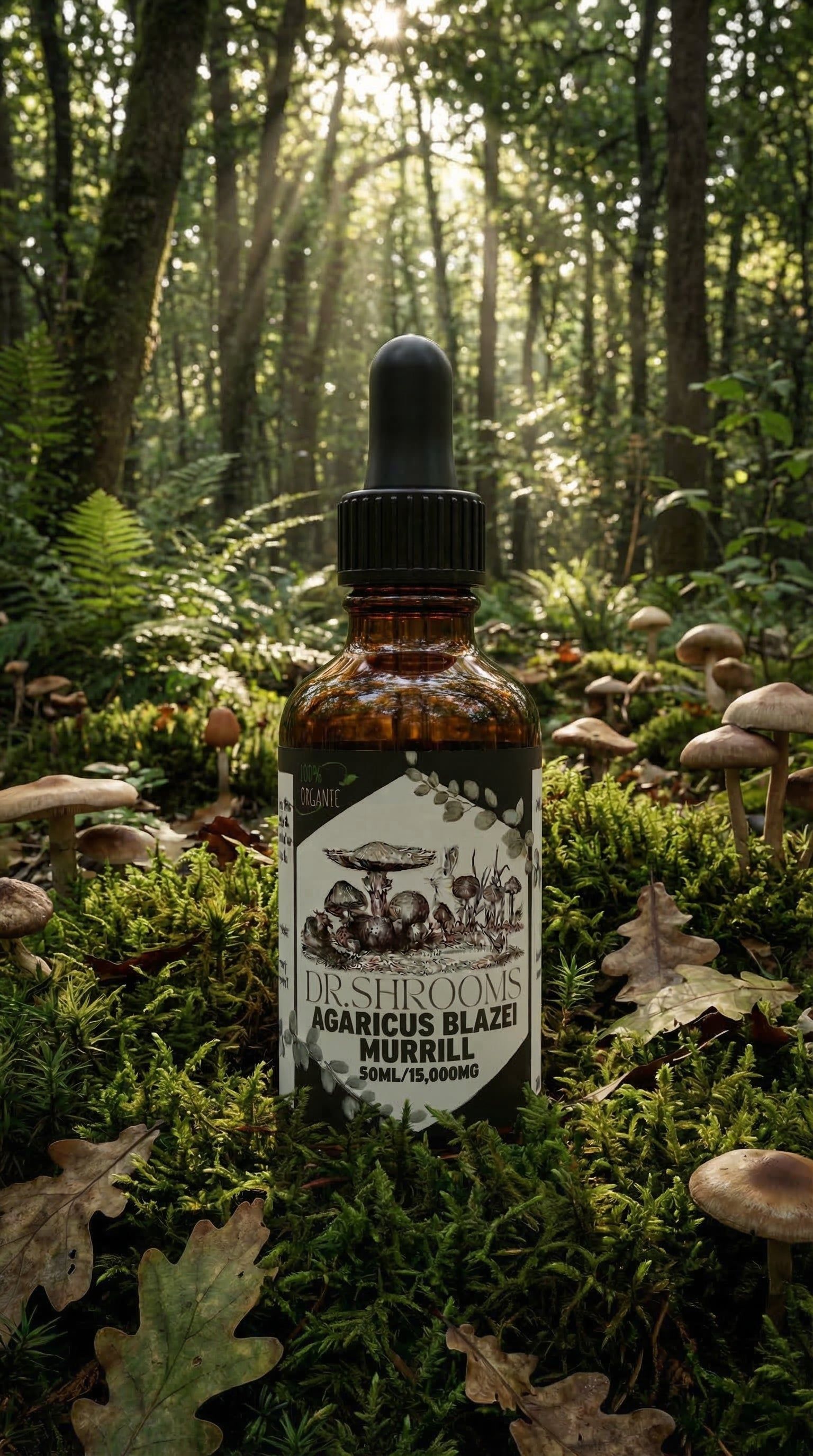
A deep-rooted immune tonic from the Brazilian rainforest.
Agaricus Blazei Murrill, known in Brazil as the “mushroom of the sun”, is one of the richest natural sources of beta-glucans in the mushroom kingdom. Prized in Japanese and Brazilian traditions for generations, it has become one of the most researched culinary-medicinal mushrooms in the world.
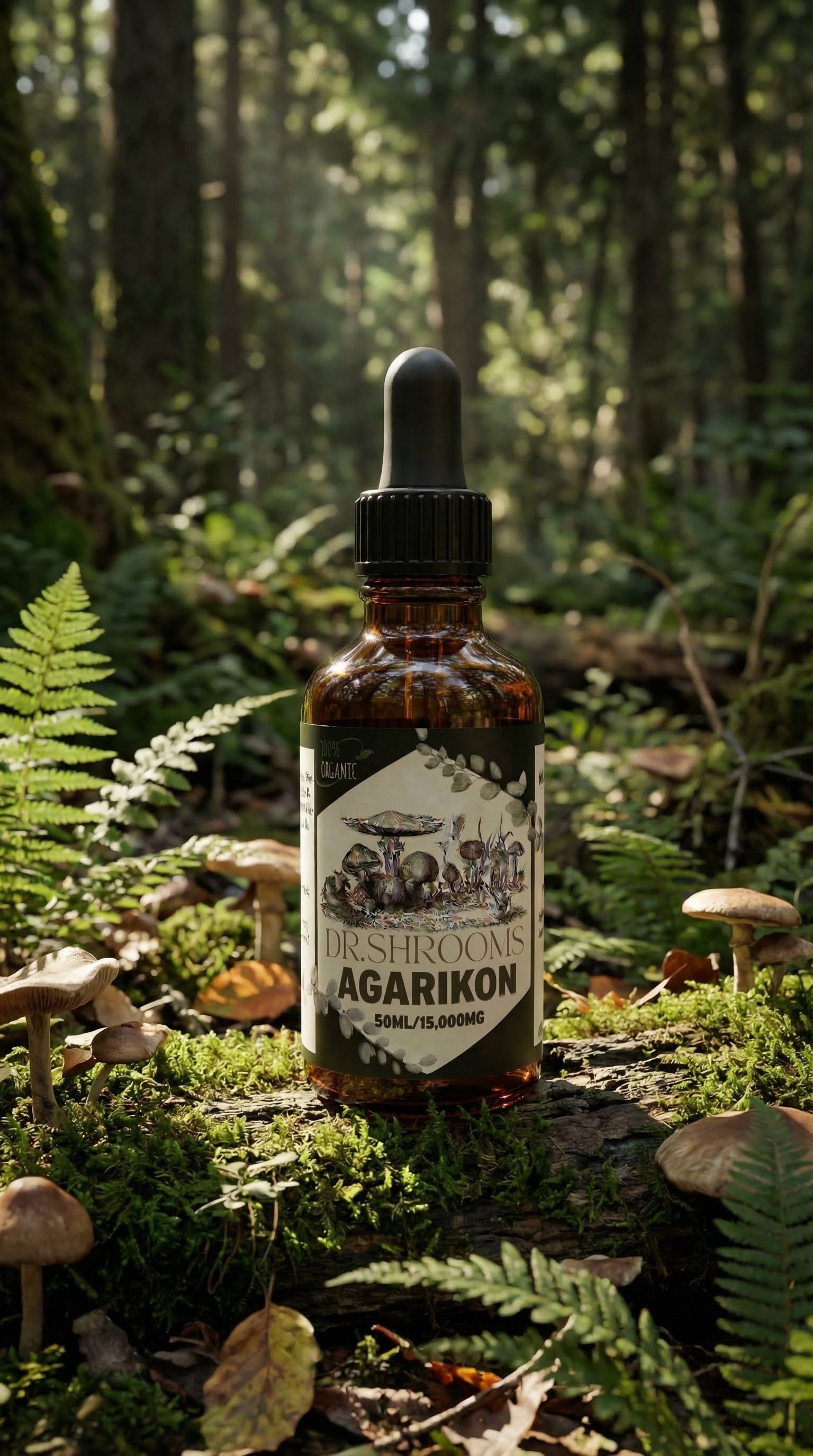
The ancient mushroom of the old-growth forests.
Agarikon is one of the oldest recorded medicinal mushrooms, described by the ancient Greek physician Dioscorides and treasured for centuries as a tonic for the chest and airways. Today it is one of the rarest mushrooms still in use, growing slowly on ancient conifers.
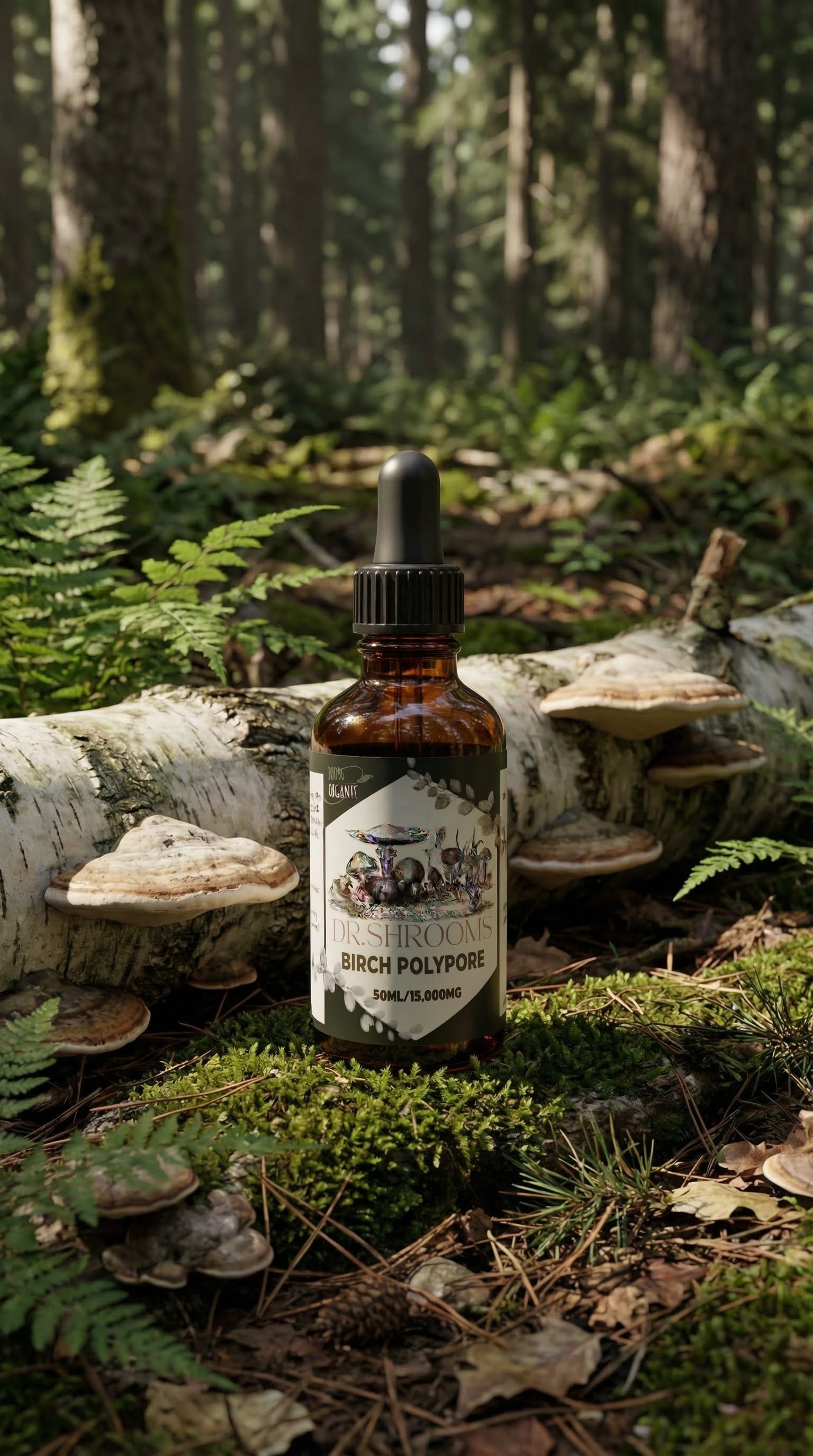
The mushroom Ötzi the Iceman carried 5,300 years ago.
When Ötzi the Iceman was discovered in the Alps, he was carrying pieces of Birch Polypore strung on a leather thong — evidence that this humble birch mushroom has been valued by humans for at least 5,300 years. Traditionally used across Europe as a digestive tonic, it draws unique compounds from its birch host tree, including betulinic acid.
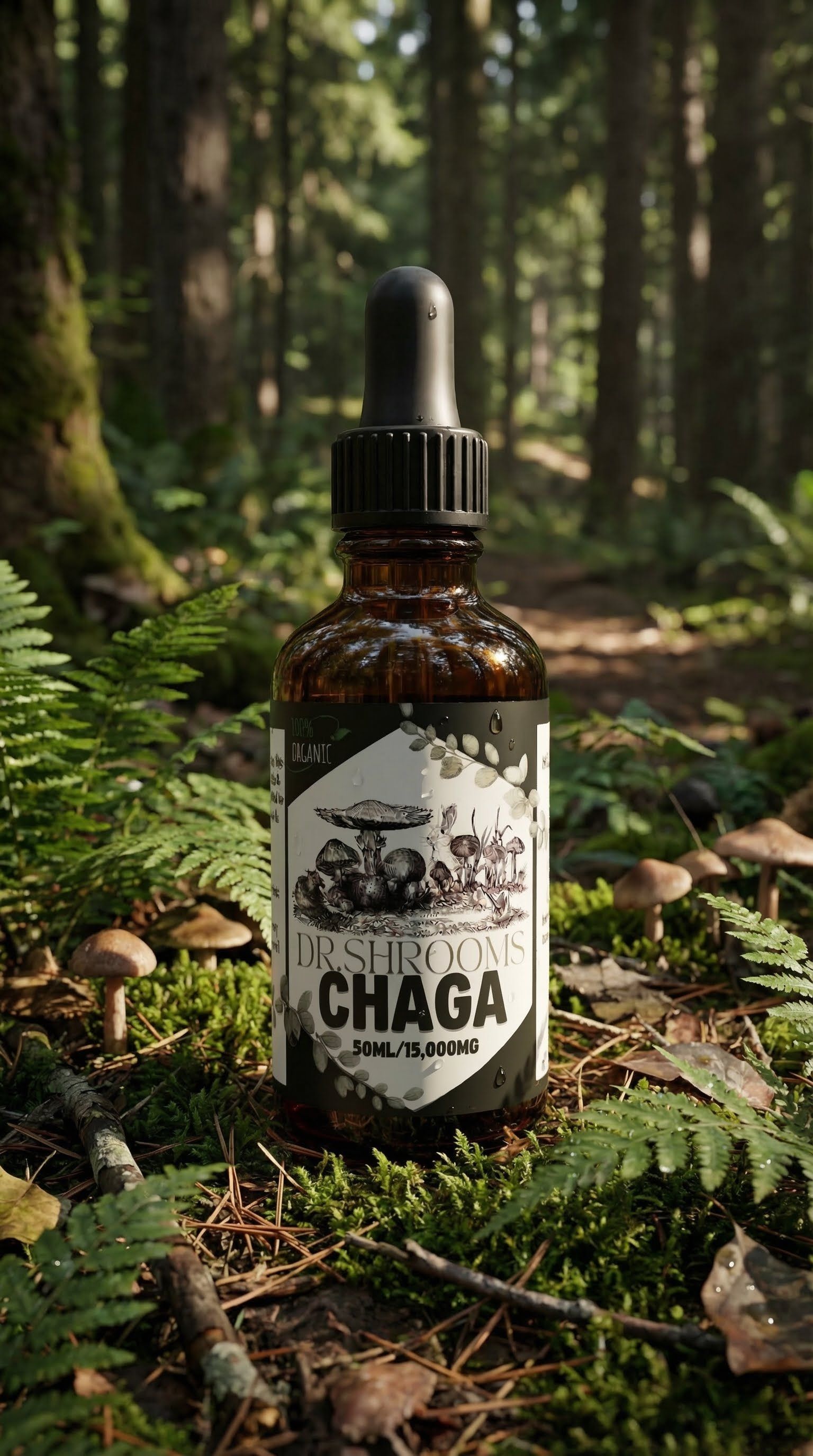
The king of the birch forest.
Chaga grows slowly on living birch trees in the cold northern forests of Siberia, Scandinavia and Canada, where it has been brewed as a daily tea for centuries. It is famed for its exceptional antioxidant content — and because it only develops its full character on living birch, how it is sourced matters.
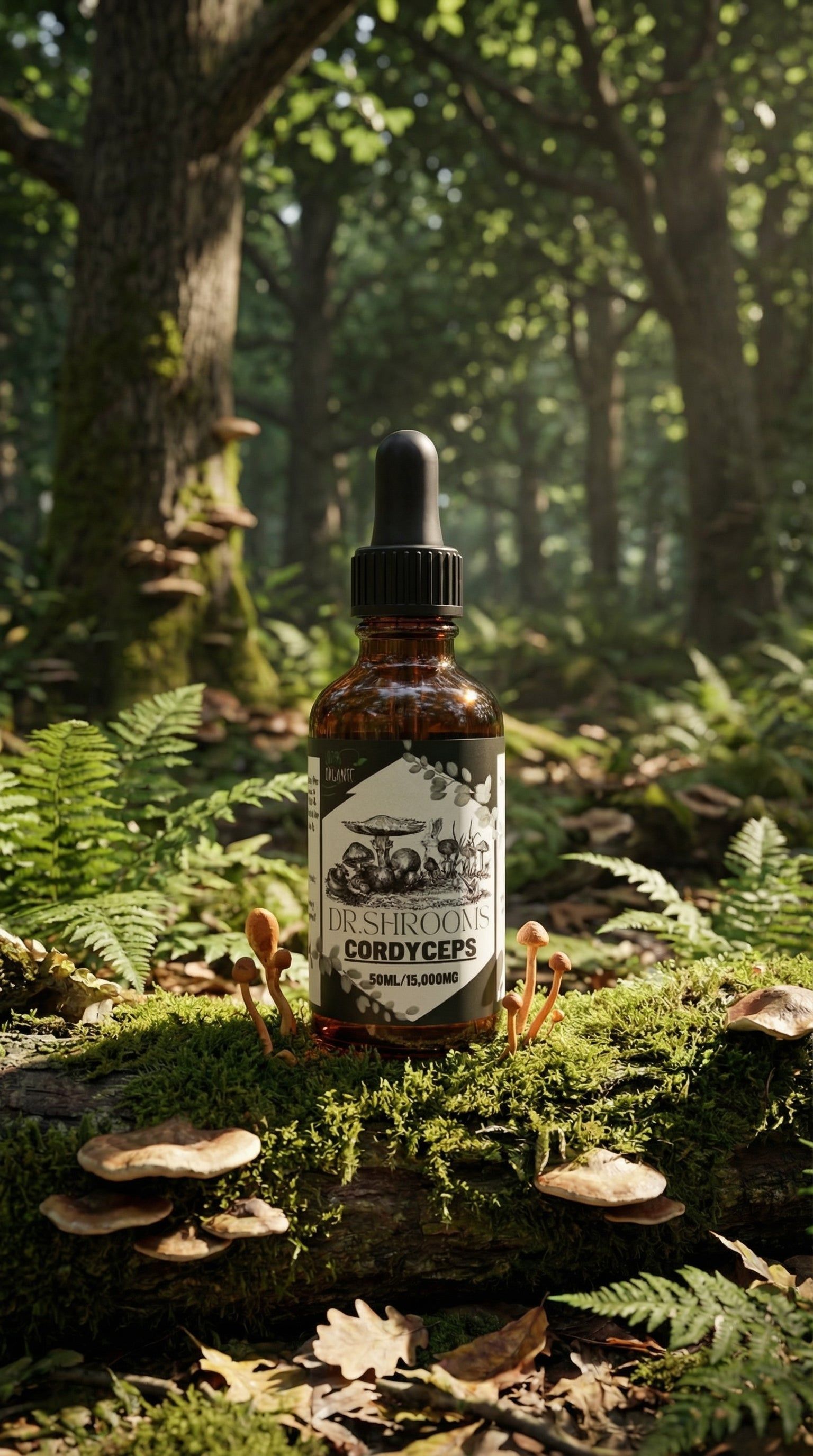
Clean, natural energy from the mountain mushroom.
CordycepsNot for human consumption has been prized in Tibetan and Chinese tradition for centuries, first noticed by Himalayan herders whose yaks grazed where it grew. It is traditionally used as a tonic for energy, stamina and vitality — sustained energy from within, rather than the spike and crash of stimulants.
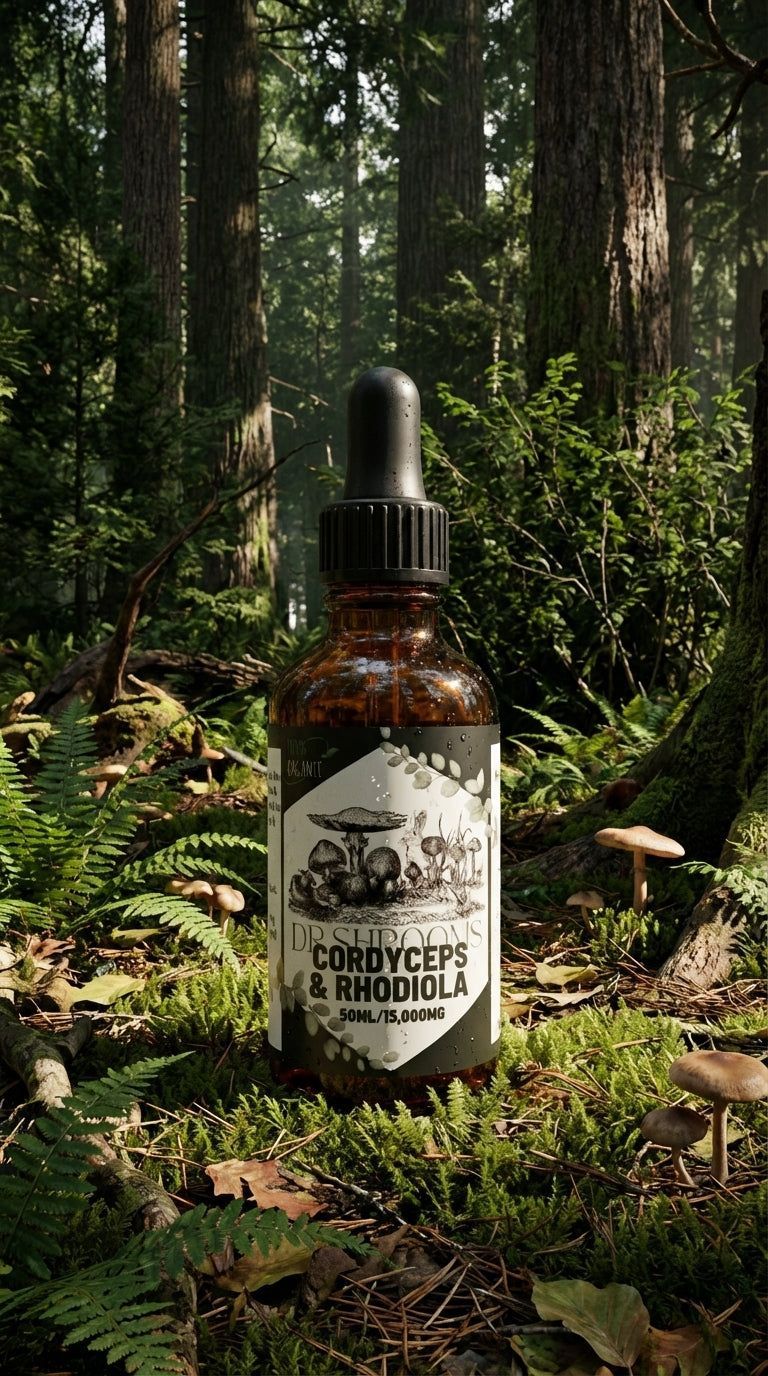
Body and mind, working together.
Two of the world’s best-known adaptogens in one tincture. CordycepsNot for human consumption, the Himalayan mushroom traditionally used for energy and stamina, meets Rhodiola, the golden root of the Arctic, traditionally used by Scandinavian and Siberian peoples to stay sharp through long, hard winters.
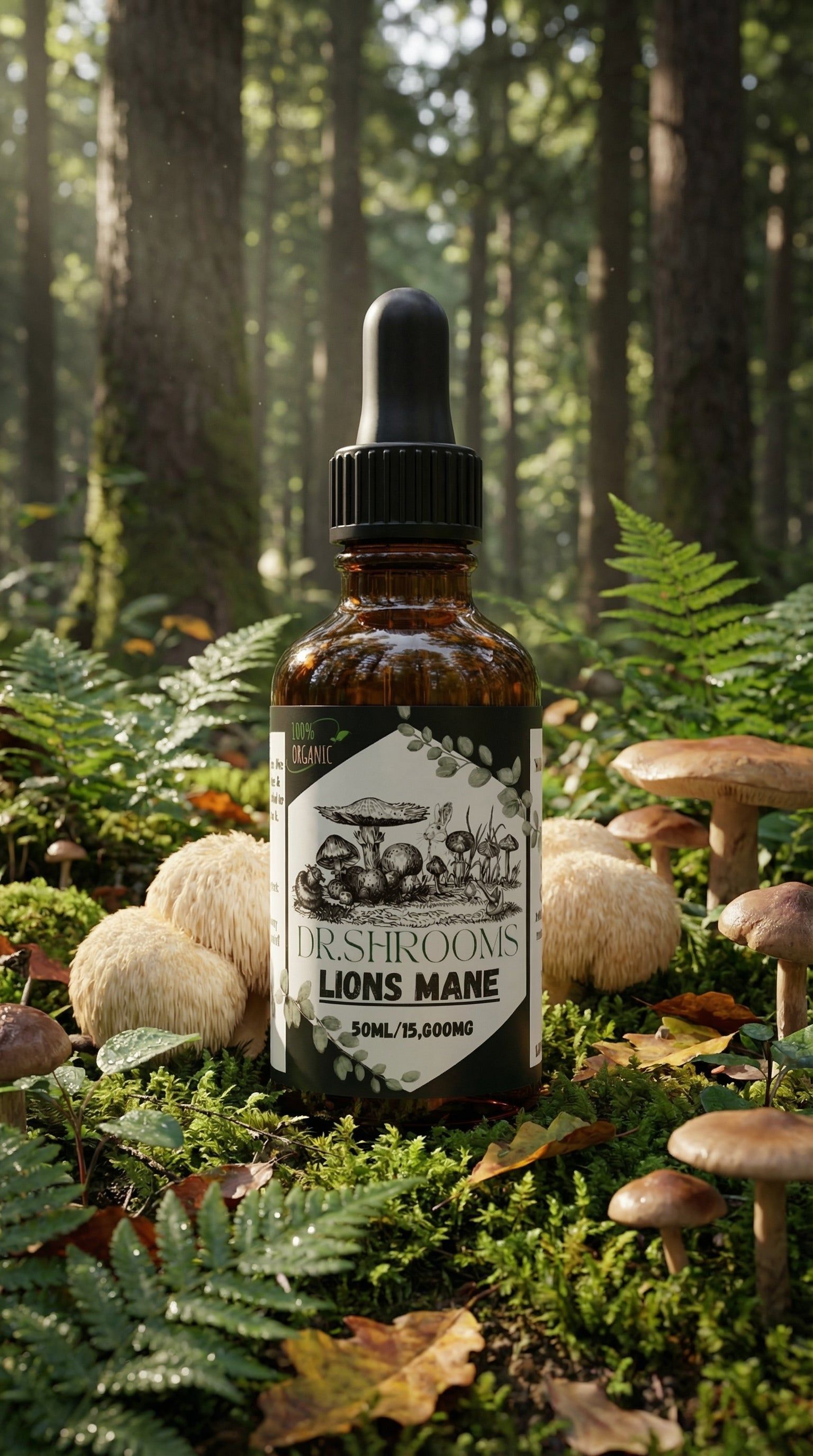
The mushroom for a clear, focused mind.
With its cascading white spines, Lion’s Mane is one of the most striking mushrooms in the forest — and one of the most researched. Traditionally enjoyed in China and Japan, where Buddhist monks were said to take it before meditation, it is famous today for its unique hericenones and erinacines.
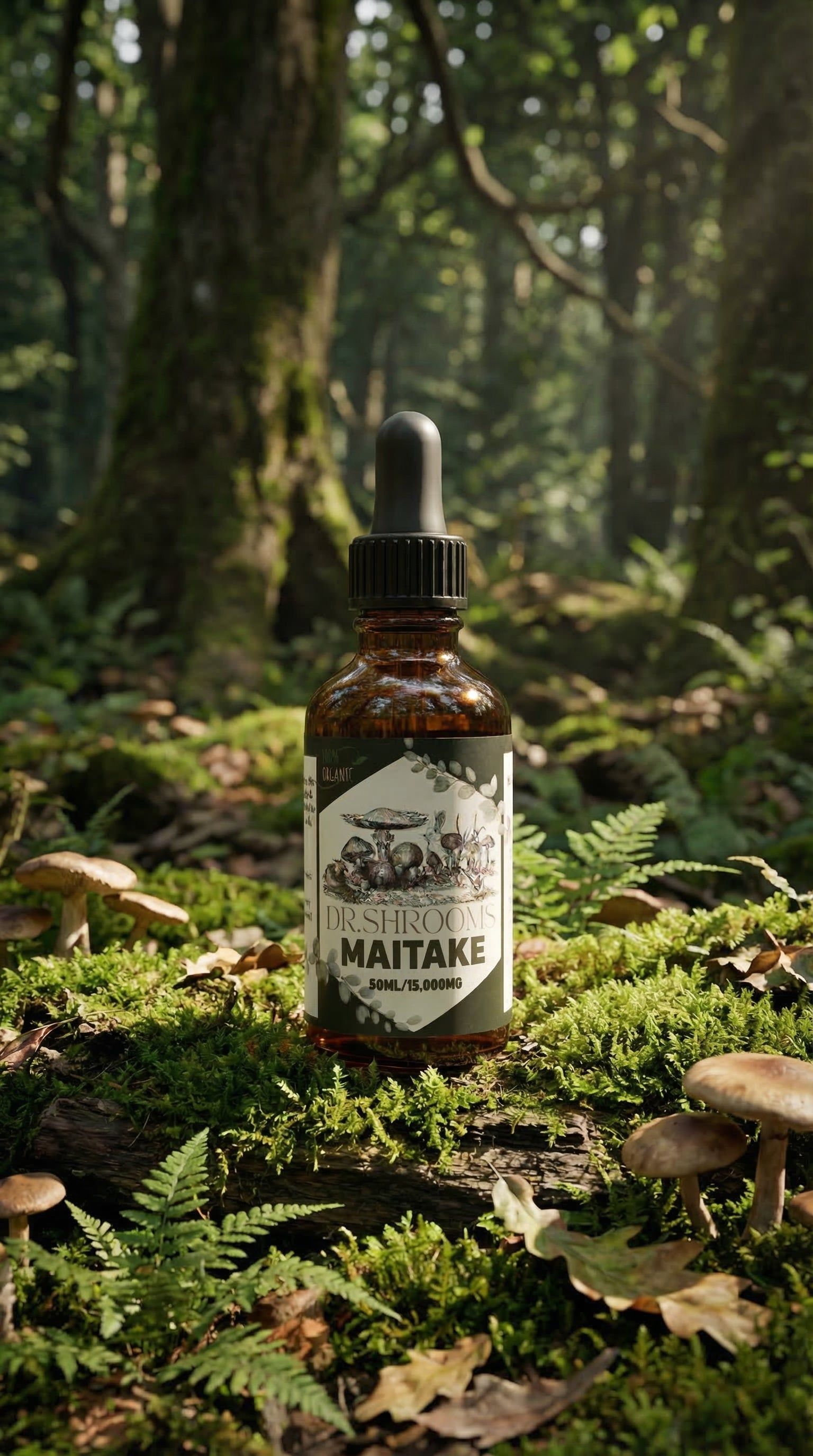
The dancing mushroom — an all-round daily tonic.
In Japan, Maitake means “dancing mushroom” — said to be what foragers did when they found one. Prized for centuries as both a delicacy and a tonic, it is best known for its unique polysaccharide fractions.
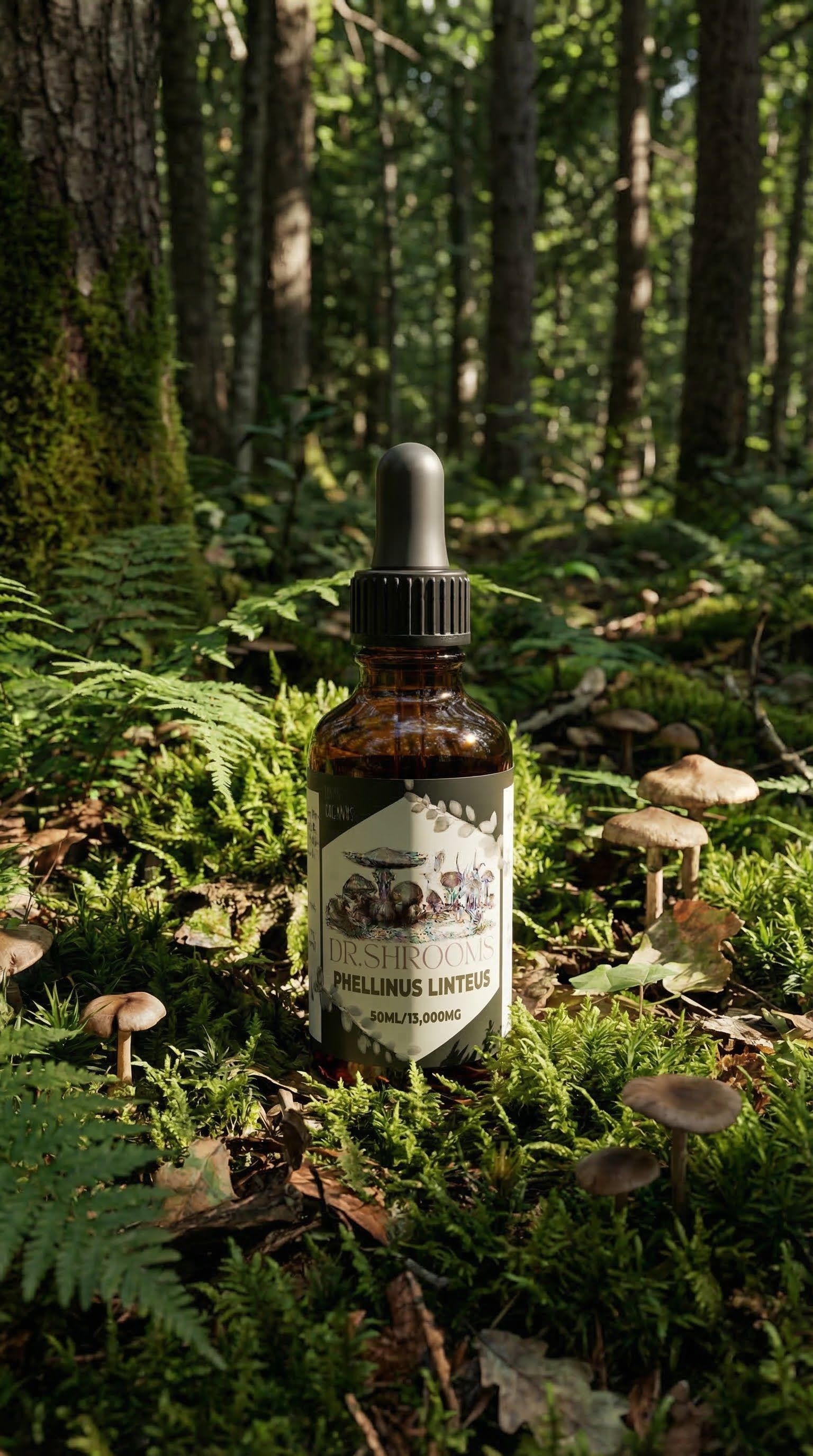
The mulberry mushroom of Korea and Japan.
Known as Sang Hwang in Korea and Meshimakobu in Japan, Phellinus Linteus is one of the most treasured mushrooms in East Asian tradition. Genuine Phellinus Linteus is notoriously difficult to source — it grows slowly on mulberry trees, which shapes its unique profile.
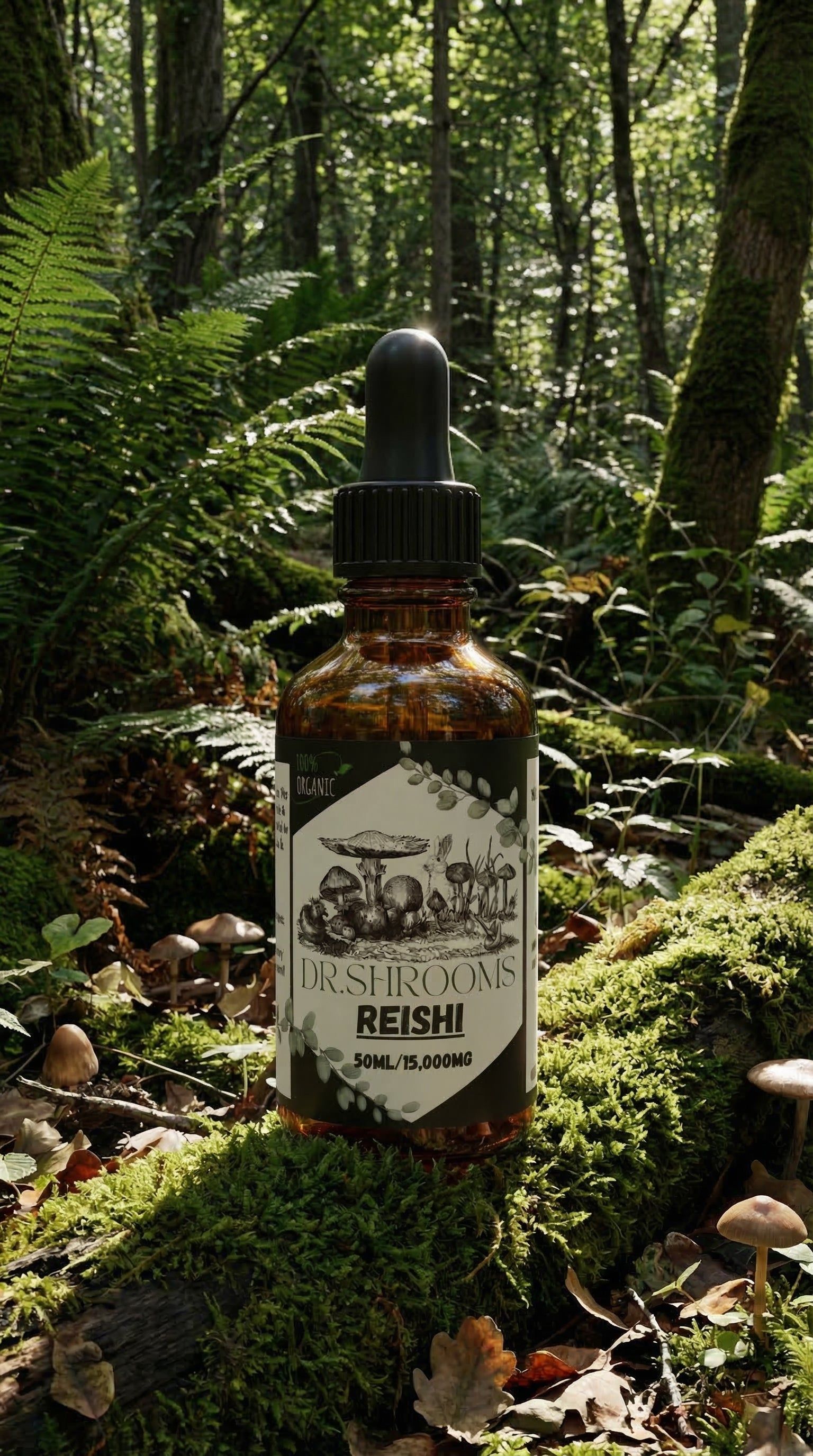
The mushroom of immortality.
For more than 2,000 years, Reishi — Lingzhi in China — has been revered as the “mushroom of immortality”, reserved in ancient times for emperors. It is traditionally used to calm the mind and support restful sleep, and it is one of the most celebrated tonic mushrooms in the world.
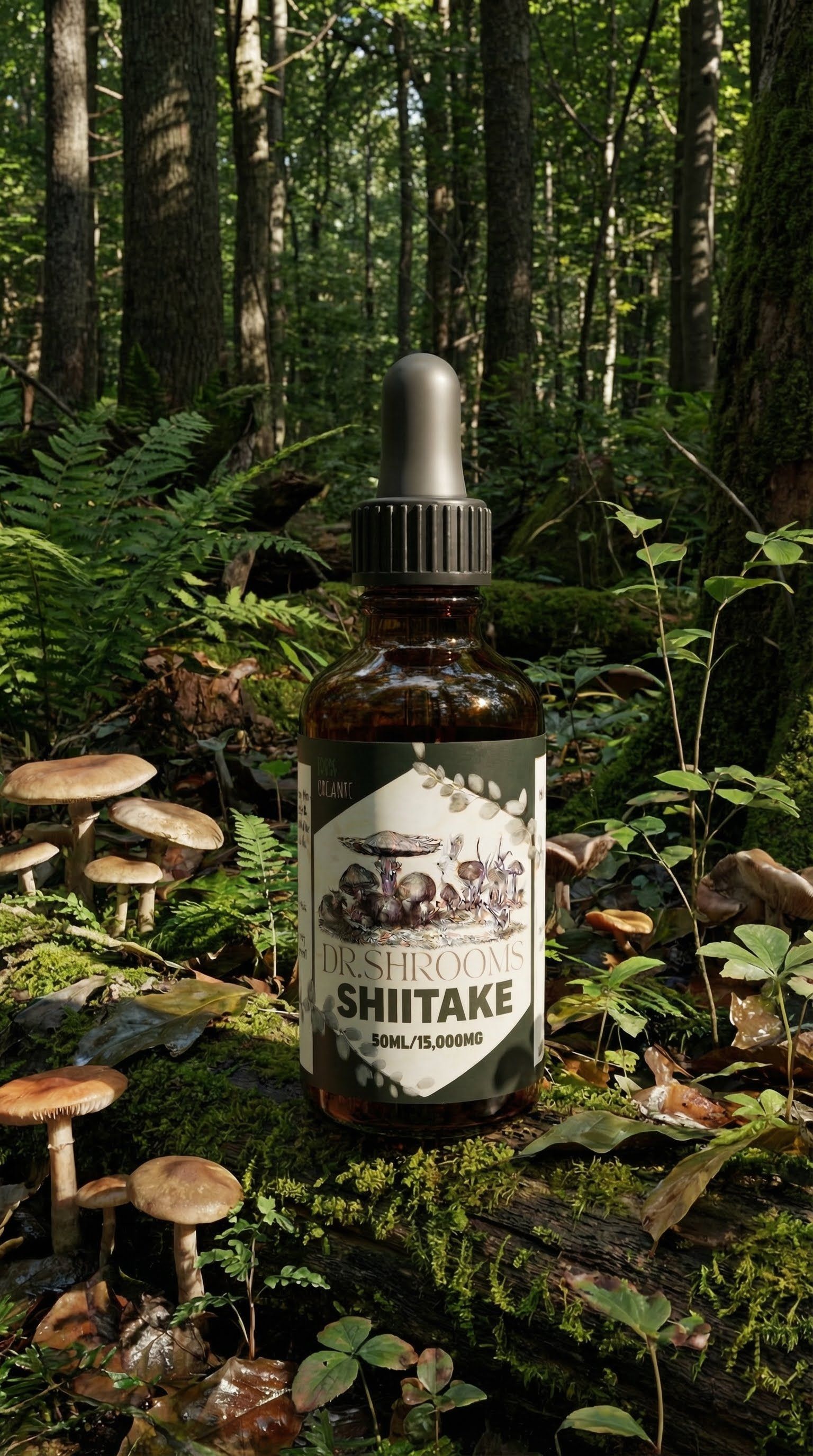
The world’s best-loved culinary mushroom.
Shiitake has been cultivated on logs in Japan and China for over 1,000 years, and is the most widely eaten medicinal mushroom in the world. Beyond the kitchen, it has long been valued as a daily tonic — naturally rich in lentinan, eritadenine and B-vitamins.
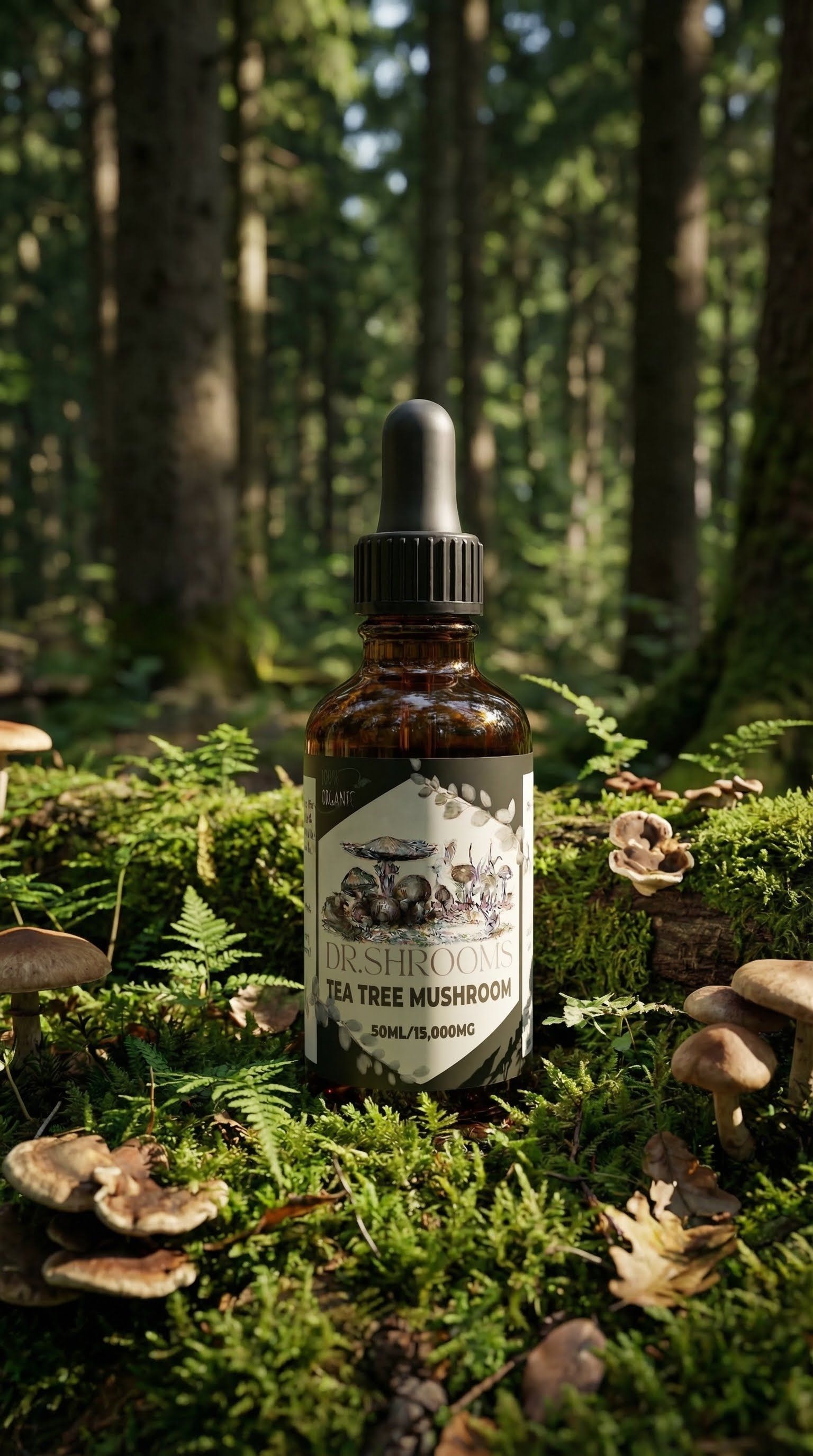
Quiet strength. Daily nourishment.
Tea Tree Mushroom (Agrocybe aegerita, also known as the black poplar mushroom) has been used in traditional Chinese practice for over a thousand years as a gentle tonic for vitality and appetite. It is the everyday mushroom that quietly supports your routine without any fanfare.
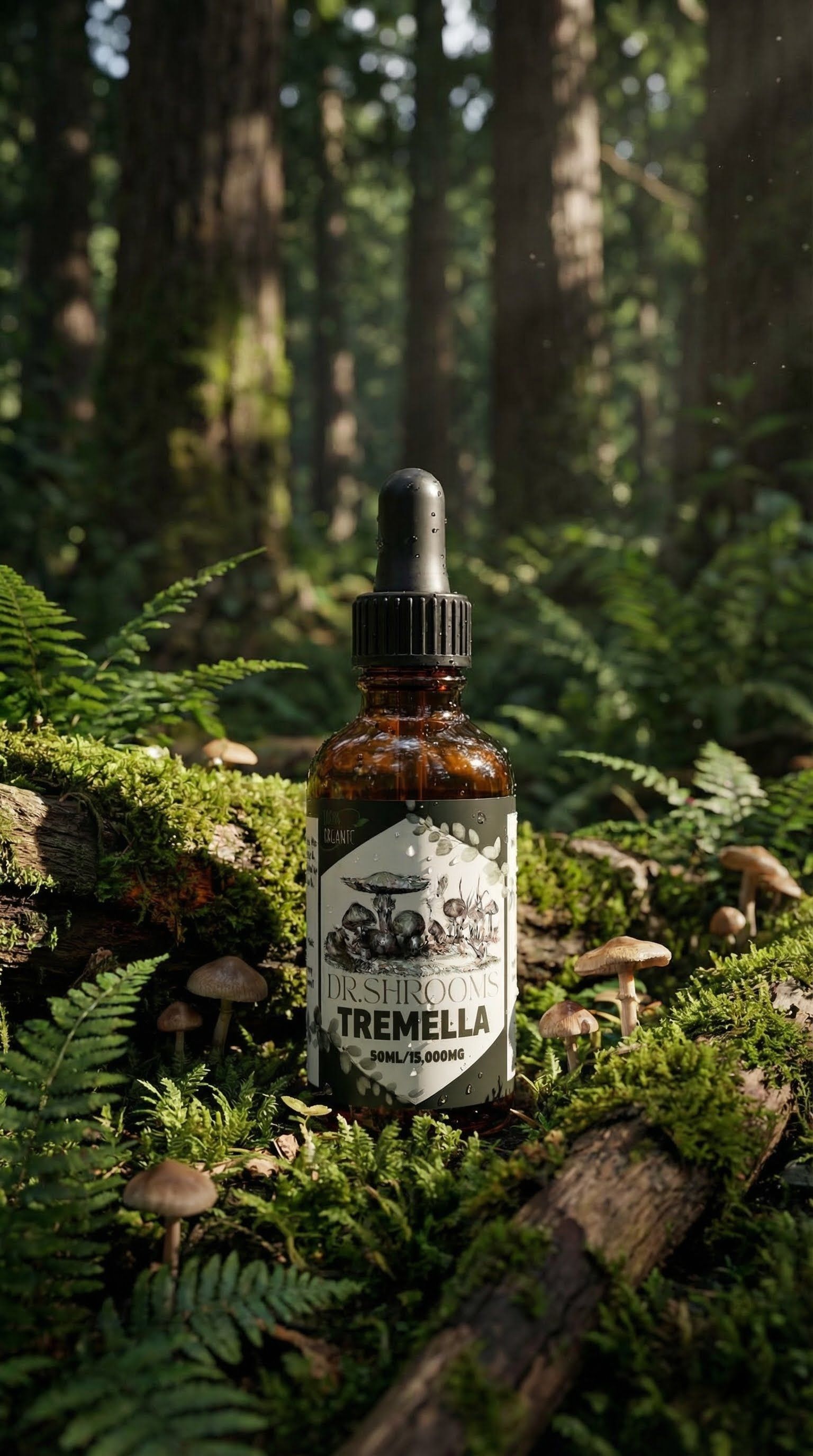
The beauty mushroom — radiance from within.
For over 2,000 years, Tremella — the delicate “snow fungus” — has been a treasured beauty tonic in Chinese tradition, famously favoured by the legendary beauty Yang Guifei. Its polysaccharides can hold several hundred times their weight in water.
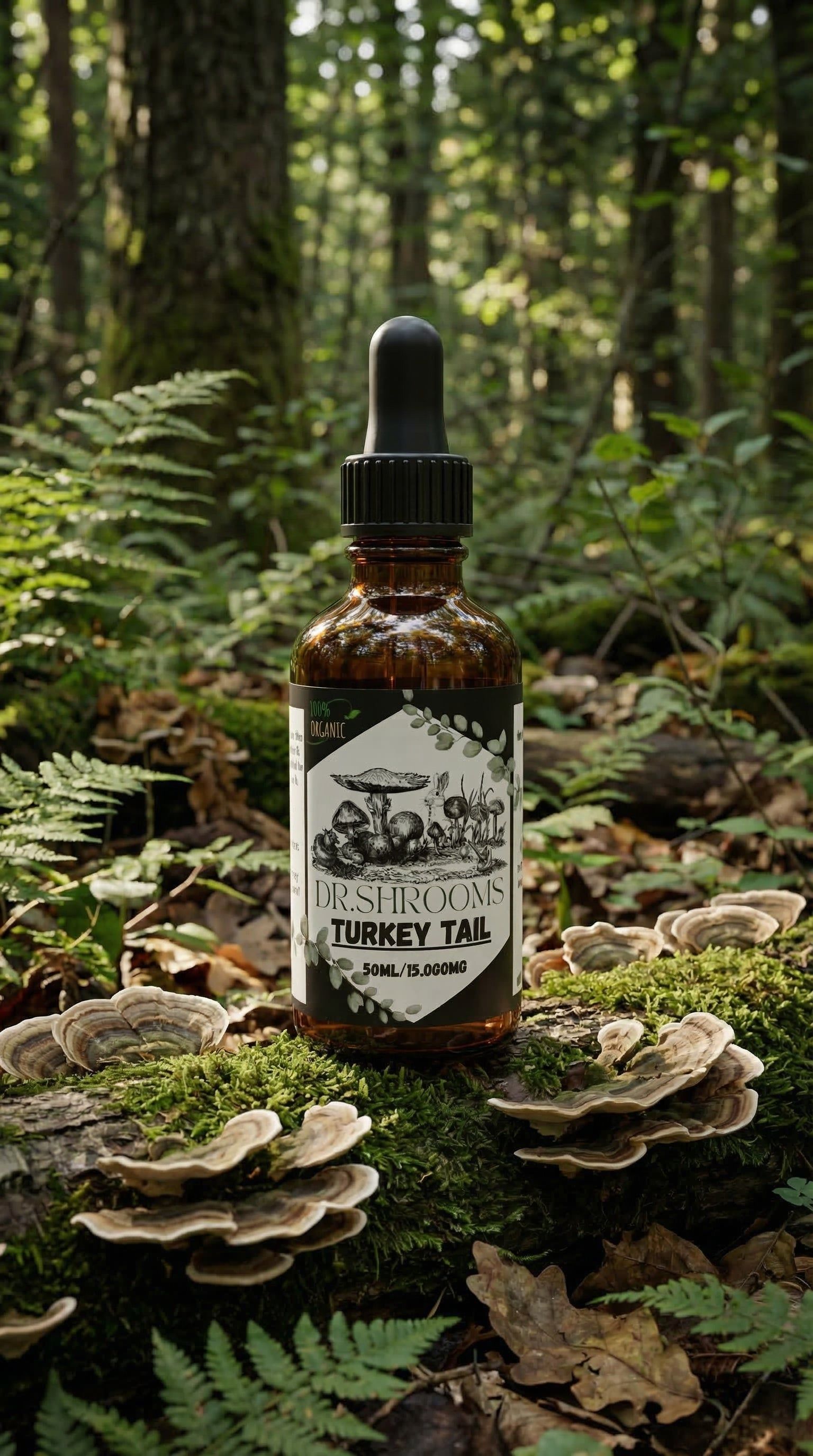
One of the most researched mushrooms in the world.
Named for its fan of banded colours, Turkey TailNot for human consumption grows on fallen hardwood in forests all over the world and has been used in traditional Chinese and Japanese practice for centuries. Its polysaccharides PSK and PSP make it one of the most researched mushrooms on earth.
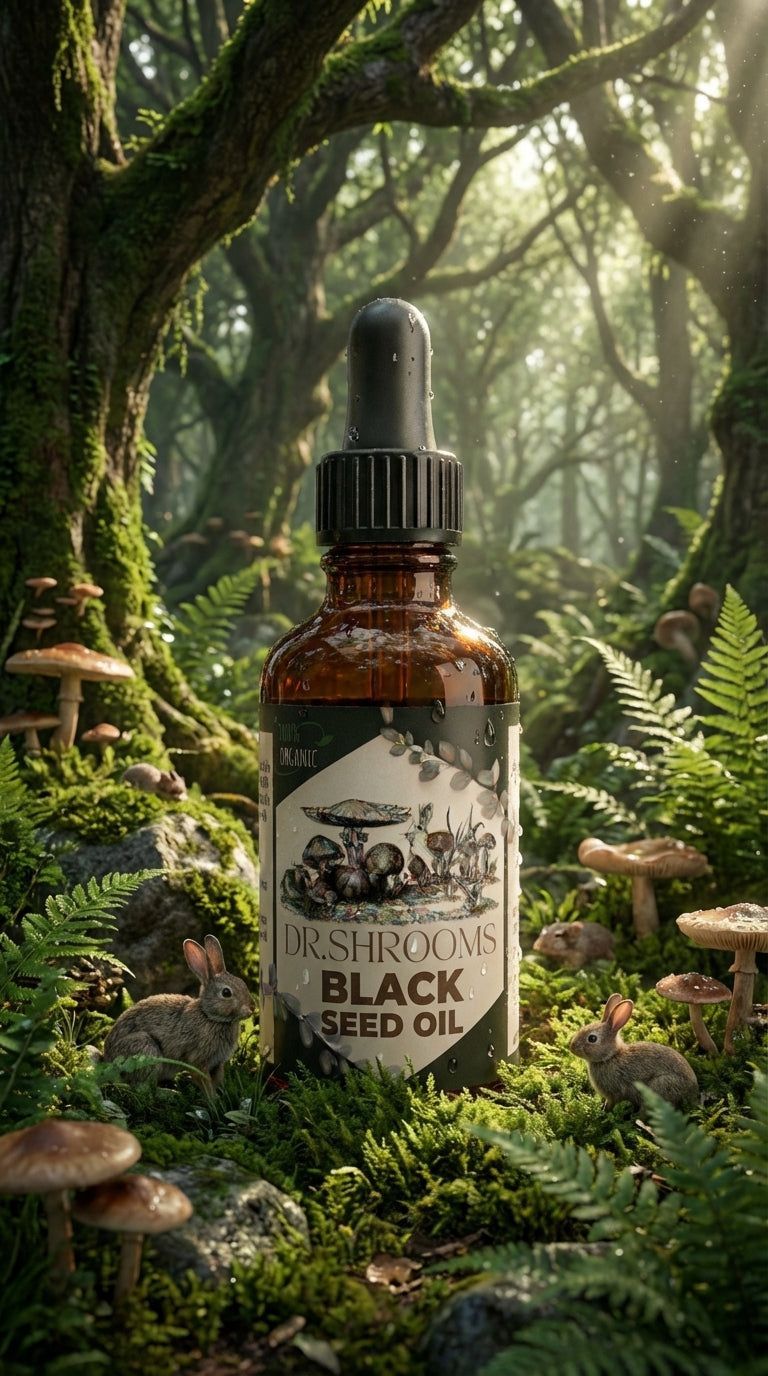
“The blessed seed” — prized for over 2,000 years.
Black seed (Nigella sativa) has been treasured across Egyptian, Greek, Ayurvedic and Islamic traditions for more than 2,000 years — black seeds were even found in Tutankhamun’s tomb. Its signature compound, thymoquinone, gives the oil its distinctive warmth.
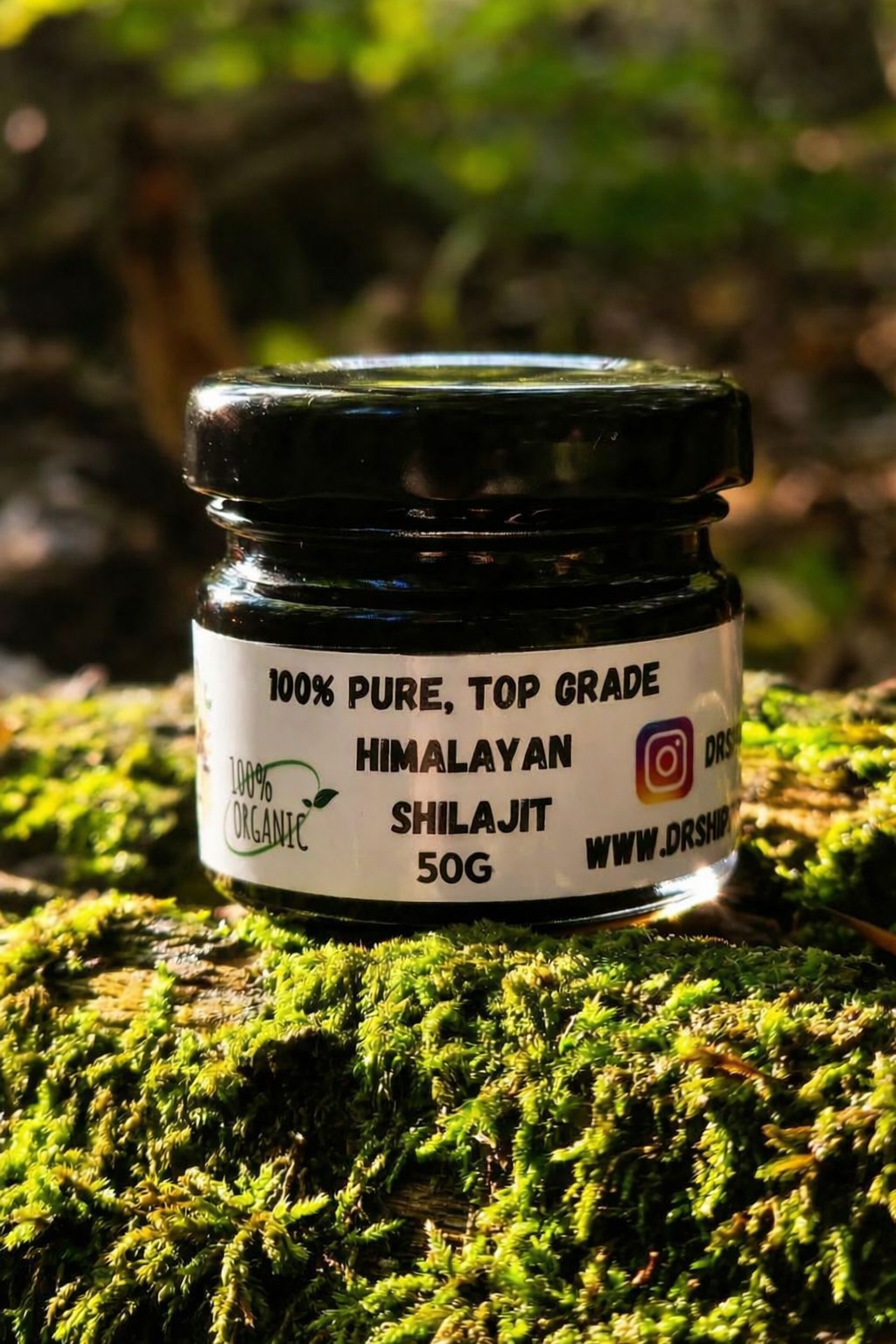
The mineral-rich resin of the Himalayas.
Shilajit is a natural resin that seeps slowly from high Himalayan rock, formed over centuries from compressed plant matter. In Ayurveda it is known as a rasayana — a rejuvenating tonic — and has been treasured for thousands of years.
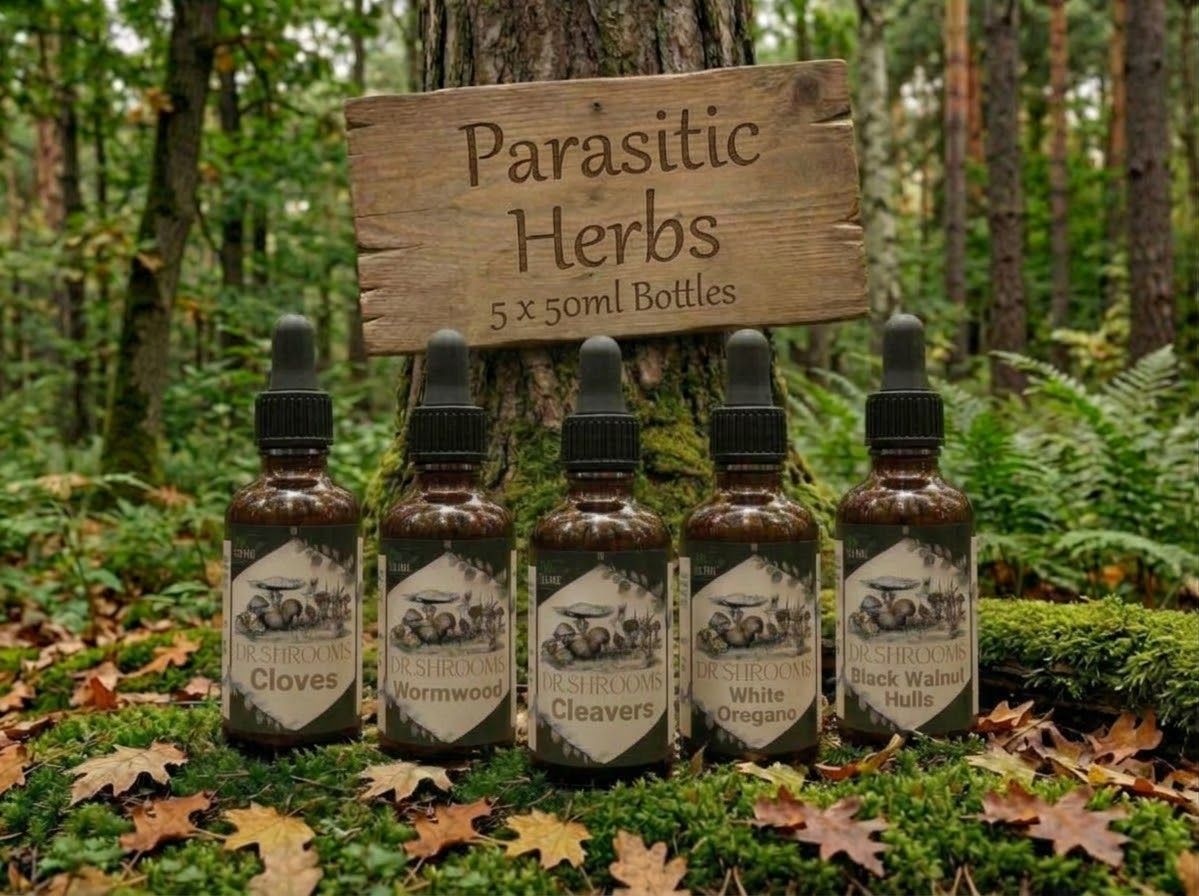
Five traditional herbs. One structured seasonal protocol.
A complete herbal cleanse kit bringing together five herbs traditionally used for generations in gut-cleansing protocols: Wormwood, Black Walnut Hull, Clove, White Oregano and Cleavers. Rather than a single ingredient, it is a structured protocol, with a clear guide included so you know exactly what to take and when.
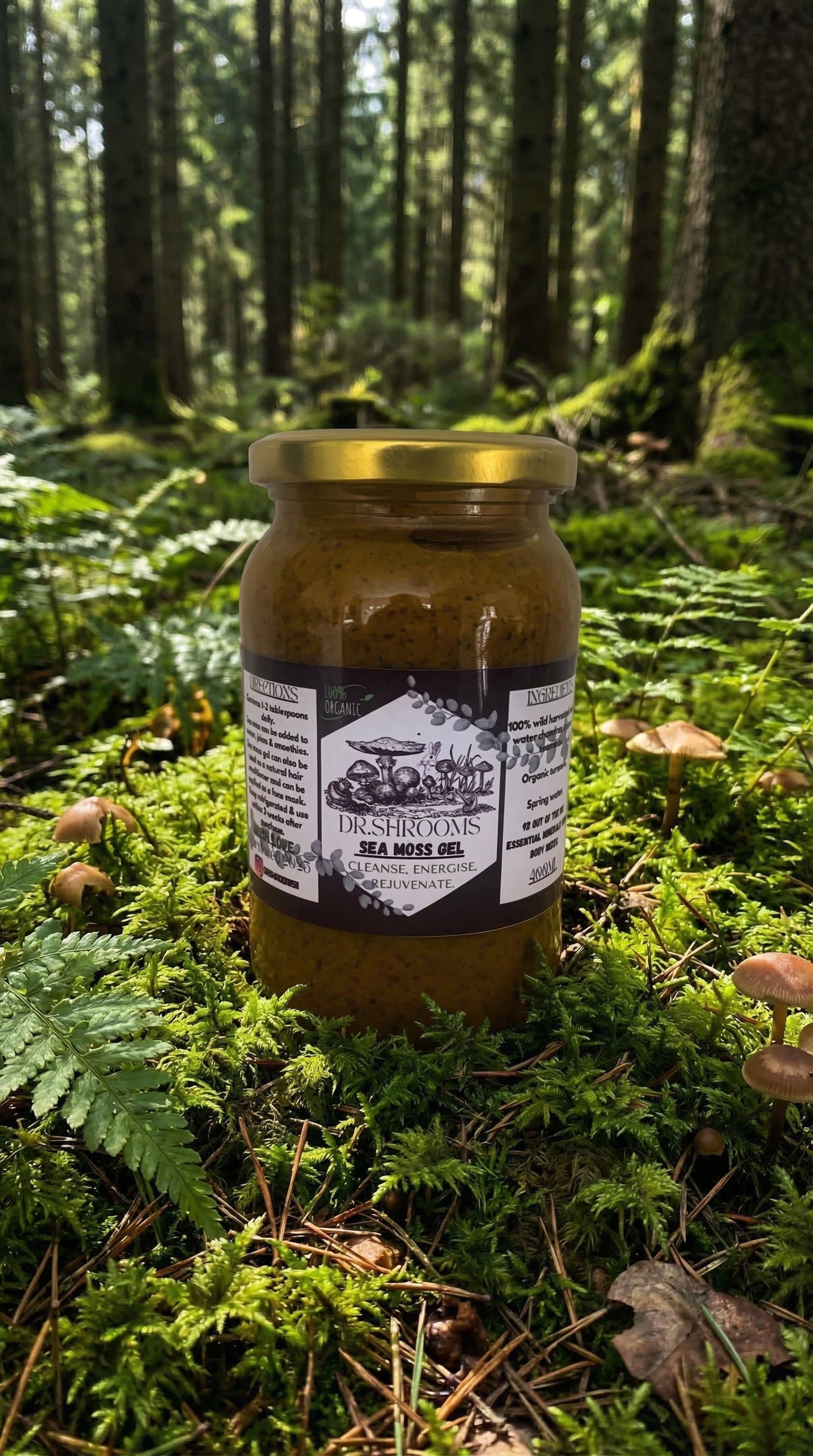
Wild ocean nourishment, prepared fresh in-house.
Sea moss (Chondrus crispus, or Irish moss) has been a nourishing staple of Irish and Caribbean kitchens for centuries. We make our gel fresh in house from wildcrafted sea moss and blend it with organic turmeric, for a naturally mineral-rich whole-food gel you can eat, blend or cook with.
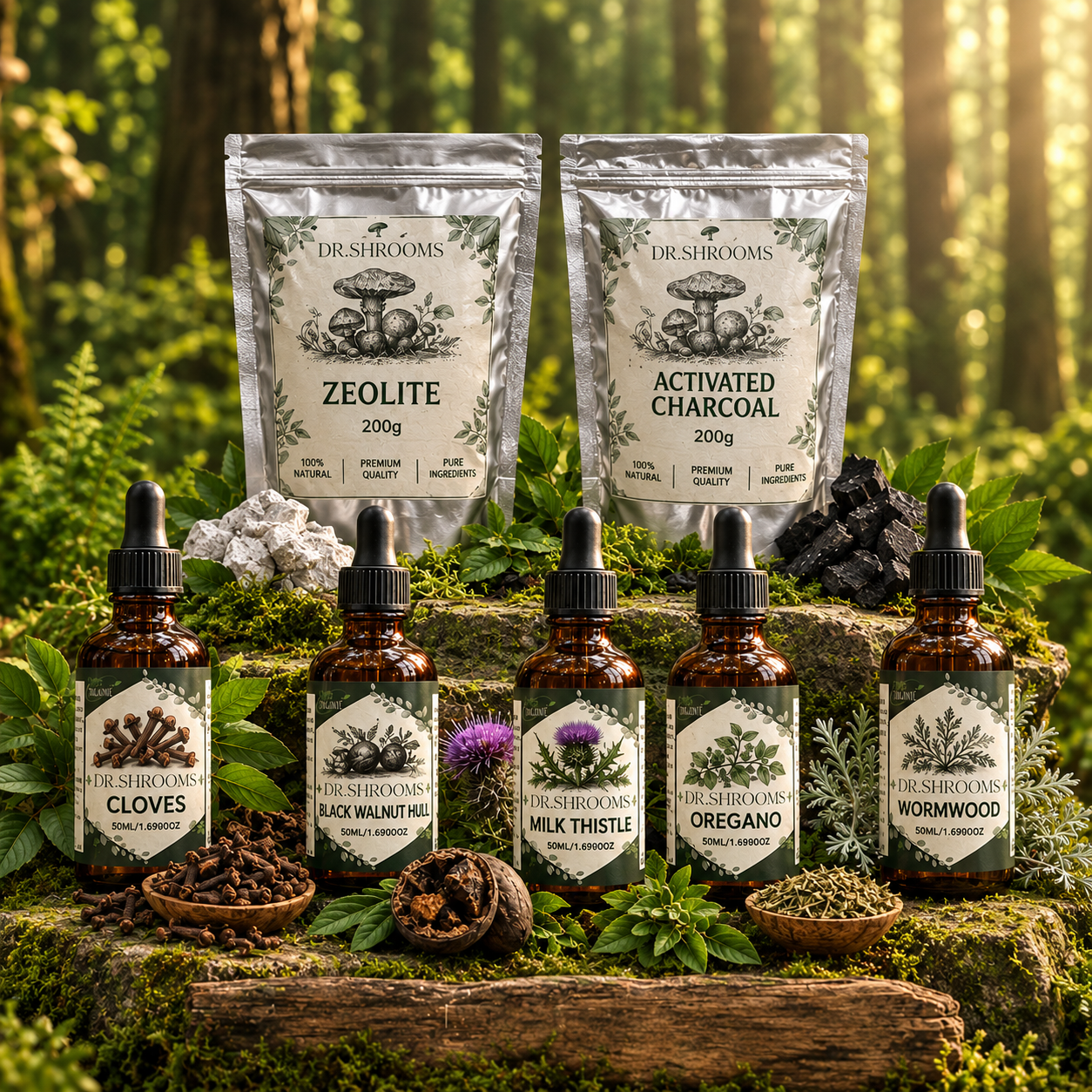
Our complete seasonal protocol: seven remedies, one structured course.
Zeolite, Activated Charcoal, Milk Thistle, Cloves, Black Walnut Hull, Oregano and Wormwood.
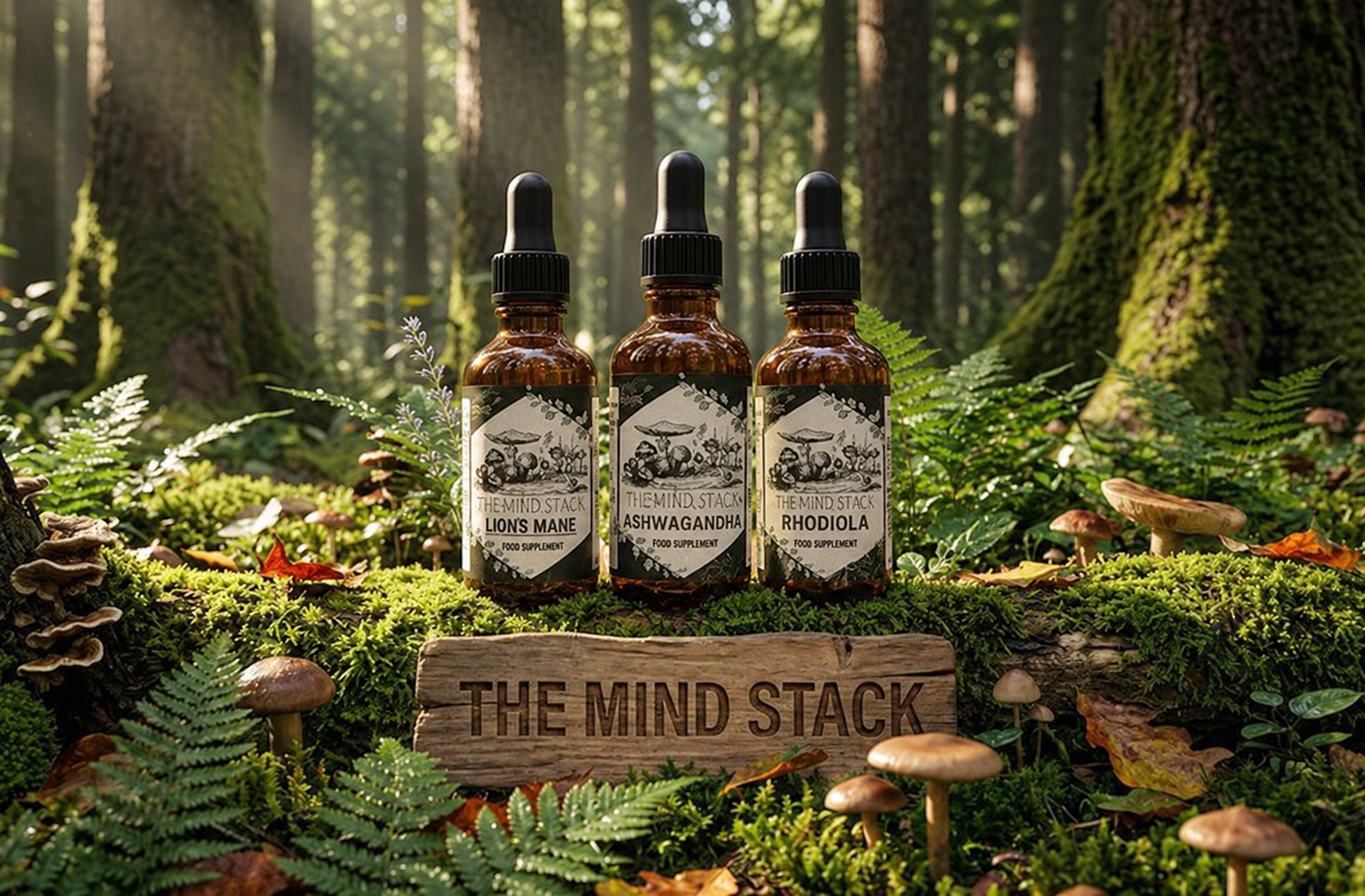
Focus, energy and calm — the daily foundation for a clear mind.
Lion’s Mane, Ashwagandha and Rhodiola.
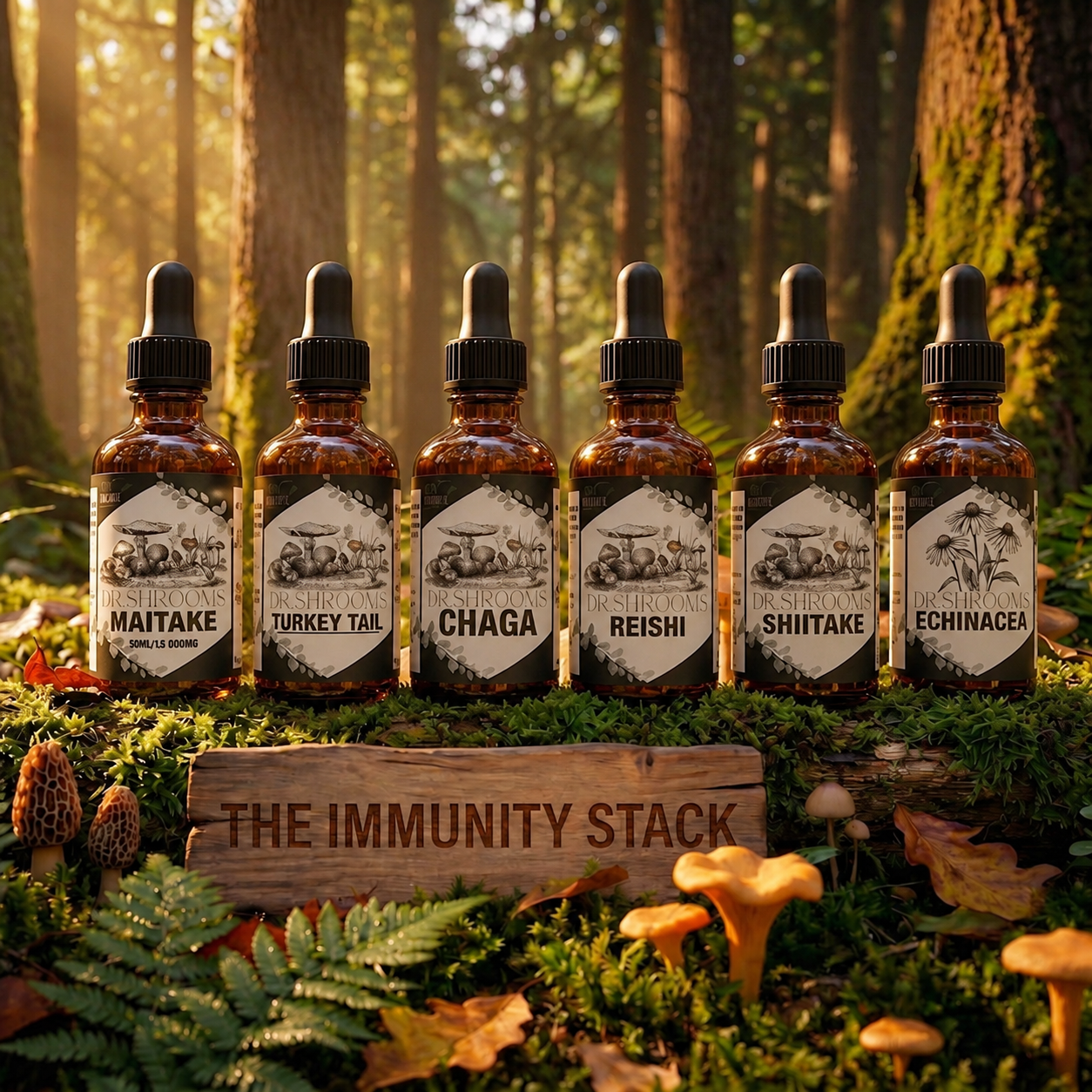
A six-part daily routine for your natural defences.
Turkey TailNot for human consumption, Maitake, Chaga, Reishi, Shiitake and Echinacea.
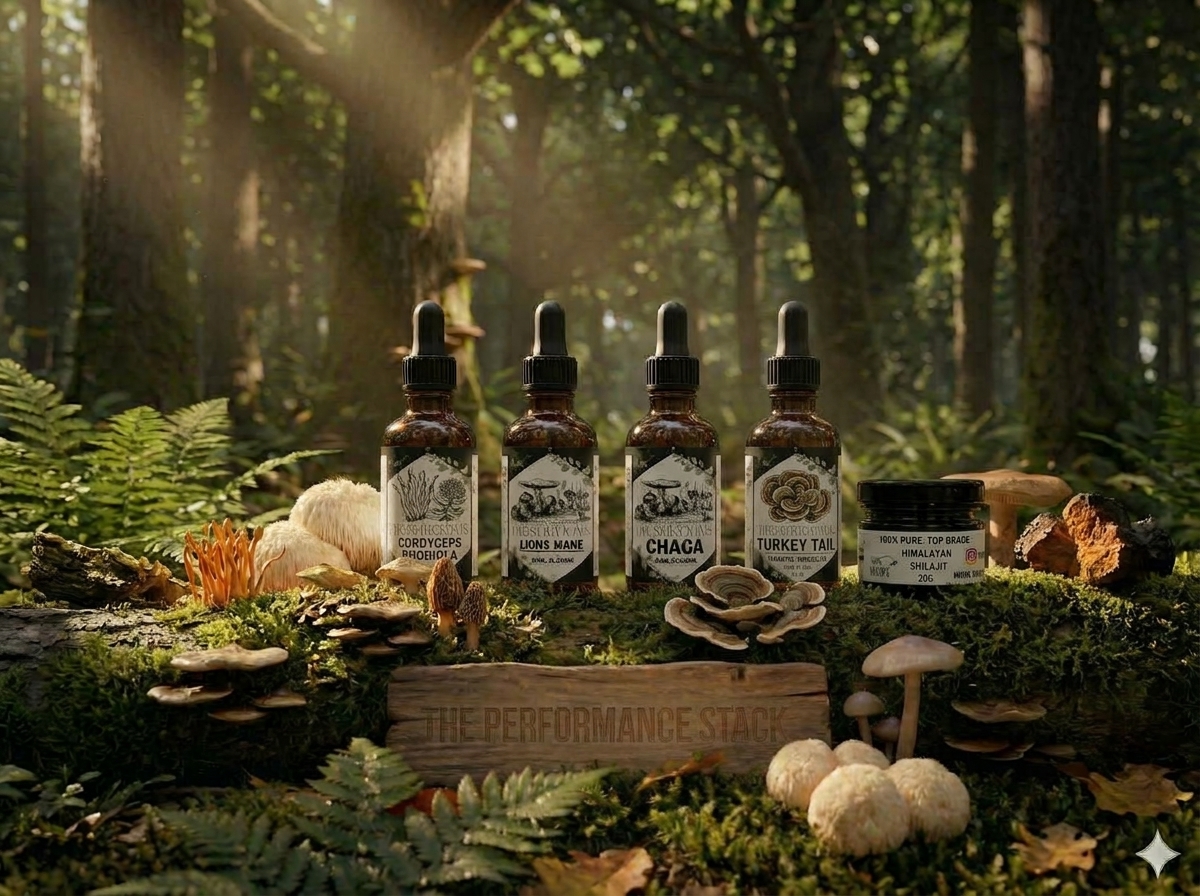
Energy, output and recovery — for athletes and high performers.
Cordyceps & RhodiolaNot for human consumption, Lion’s Mane, Chaga, Shilajit and Turkey TailNot for human consumption.
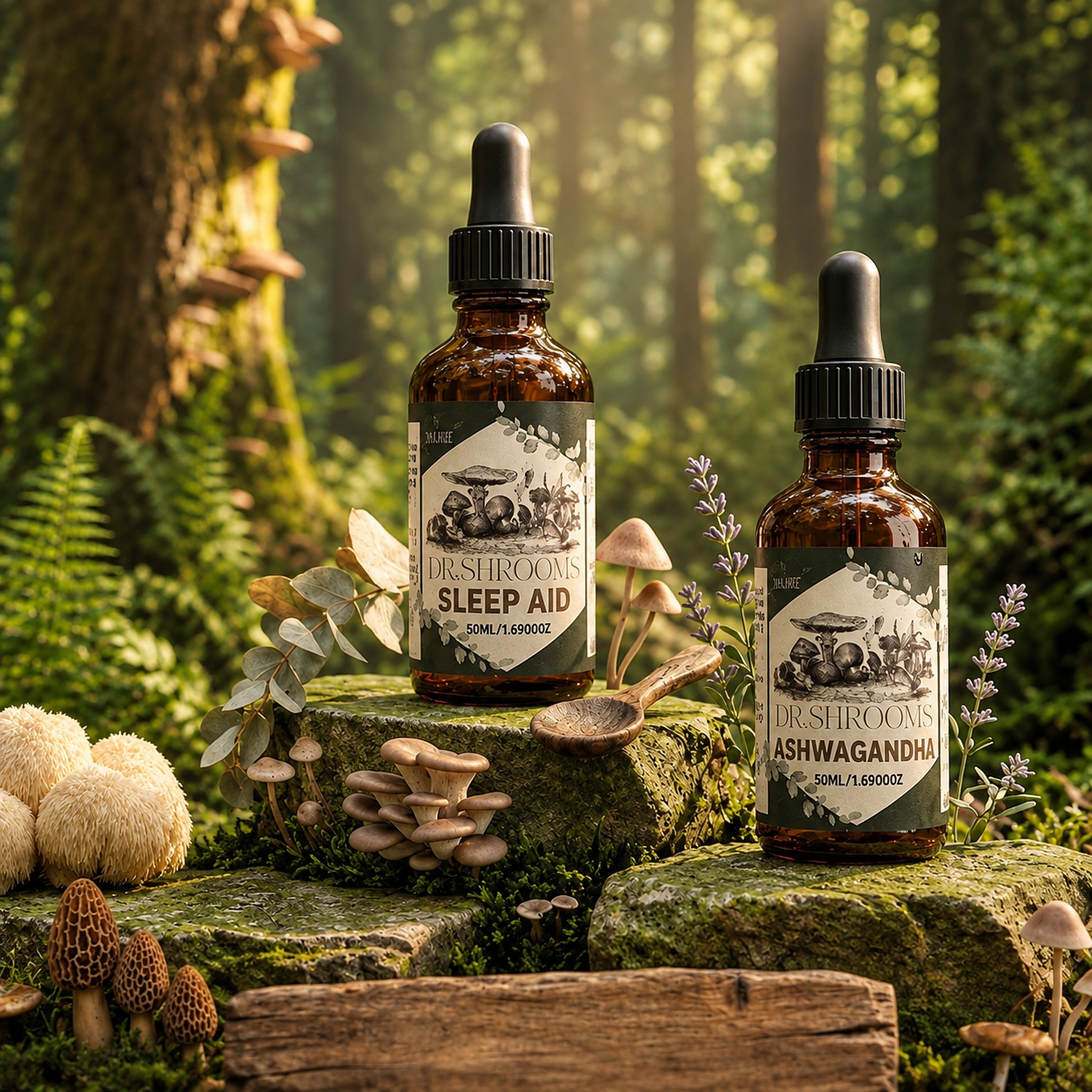
Unwind, switch off, rest deeply.
Sleep Aid and Ashwagandha.
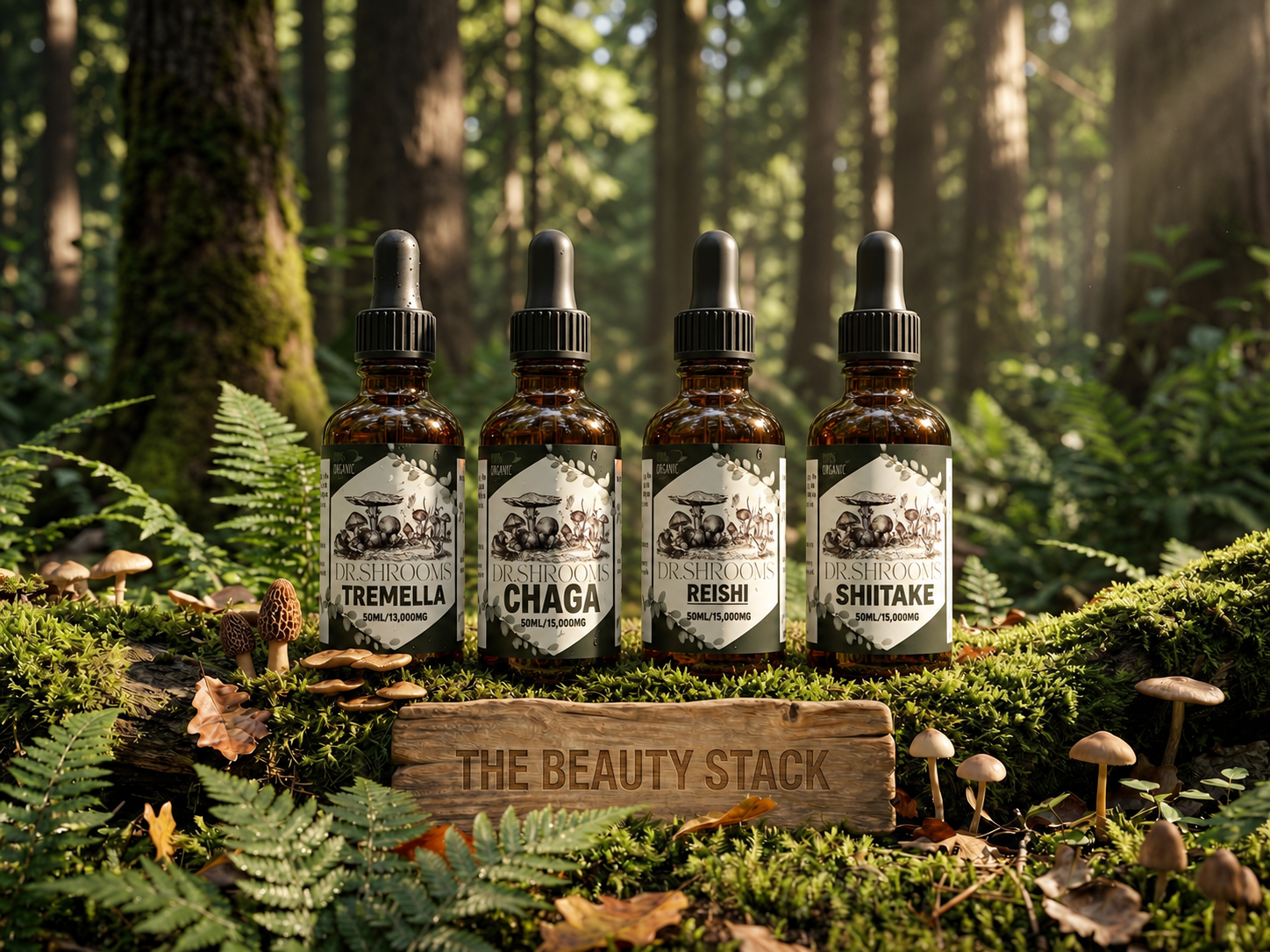
Radiance from the inside out.
Tremella, Chaga, Reishi and Shiitake.
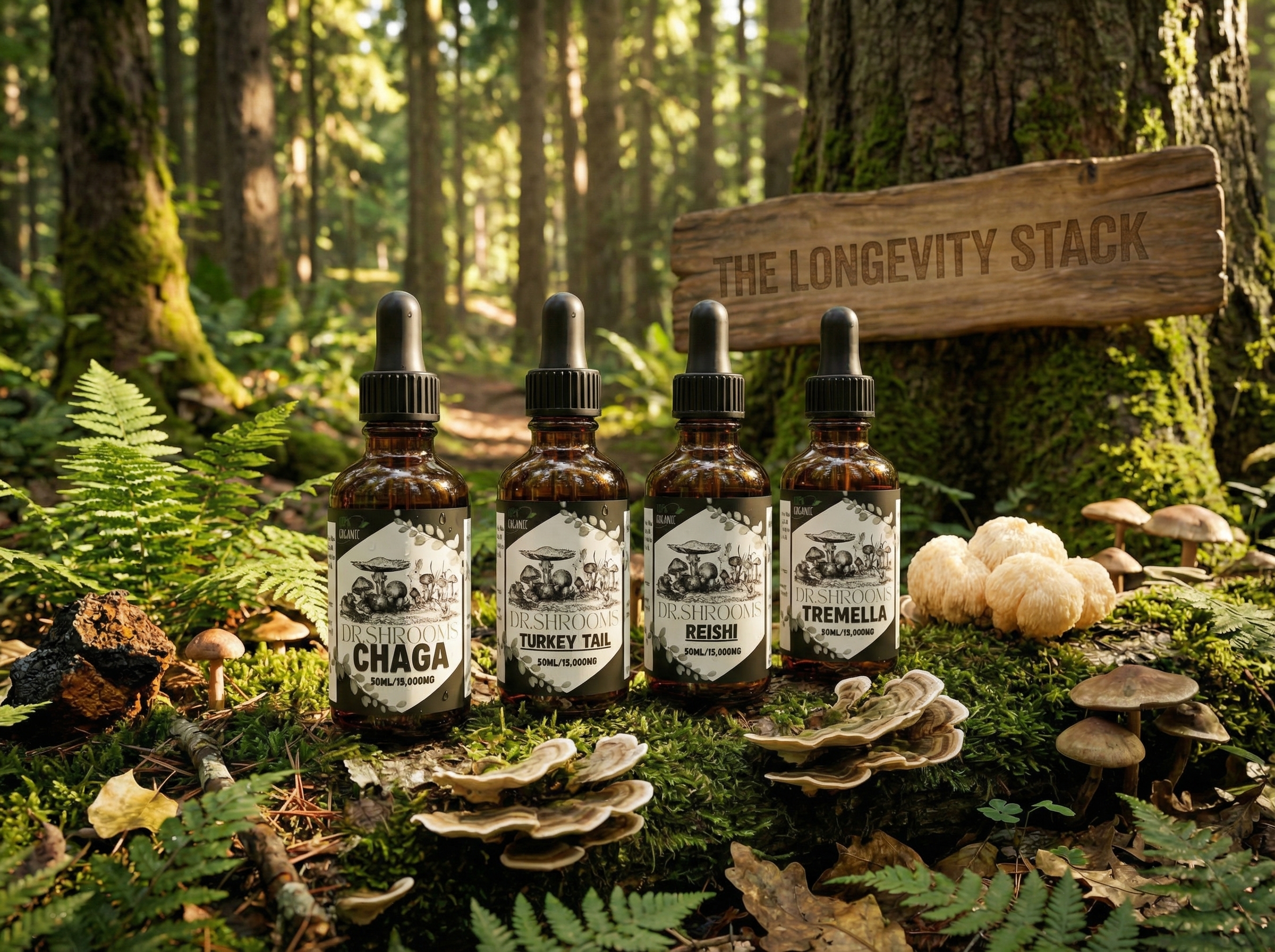
Four tonic mushrooms for the long game.
Chaga, Turkey TailNot for human consumption, Tremella and Reishi.
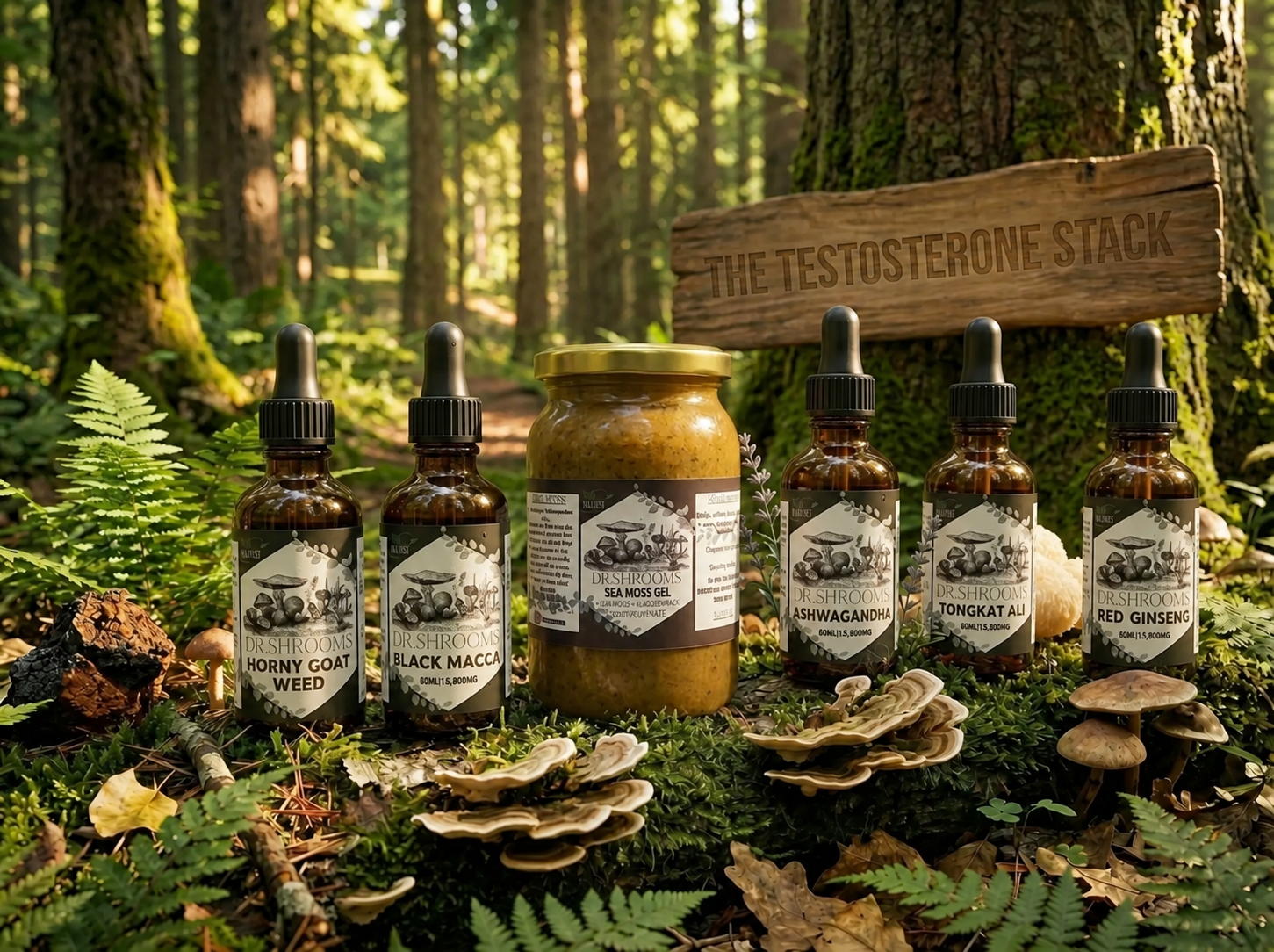
Traditional vitality herbs for men, brought together in one daily routine.
Save 15% compared with buying individually.
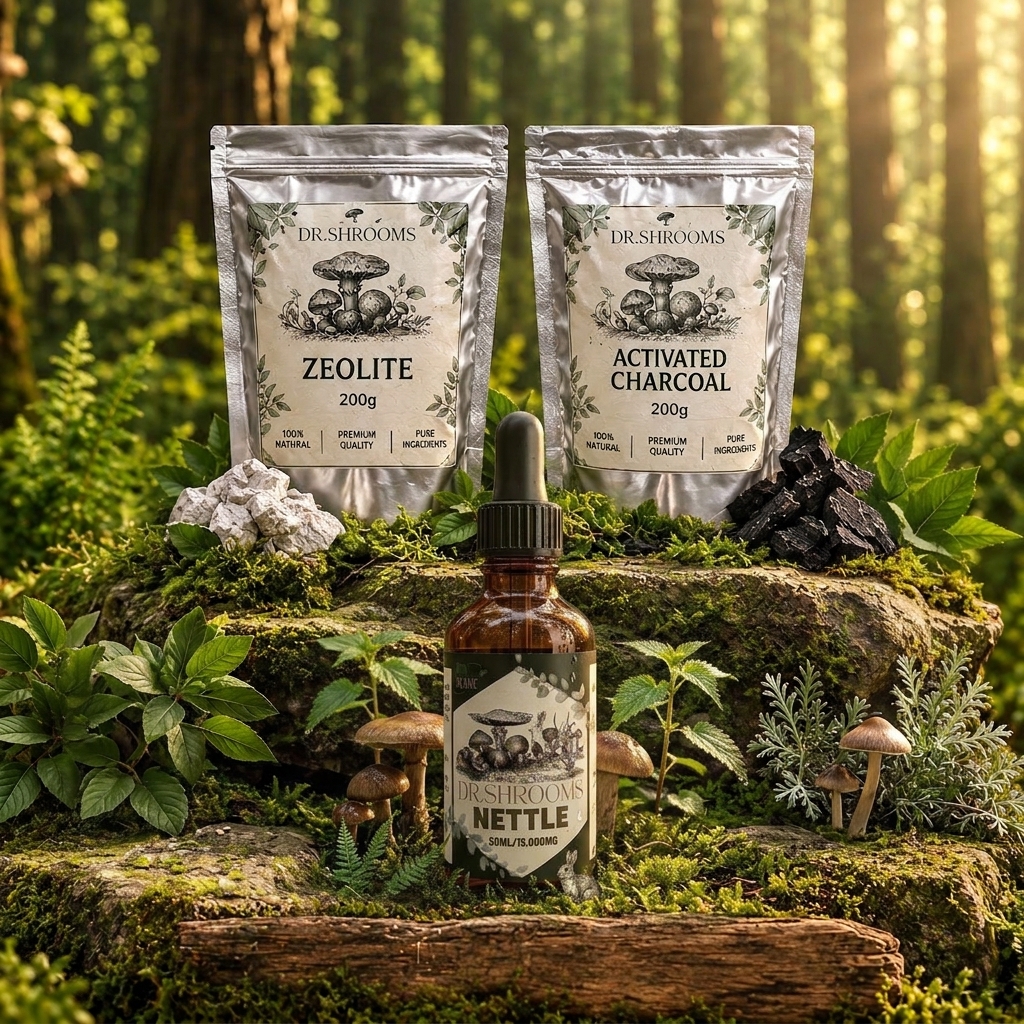
Two traditional binders, paired with nettle.
Zeolite 200g, Activated Charcoal 200g and Nettle 50ml.
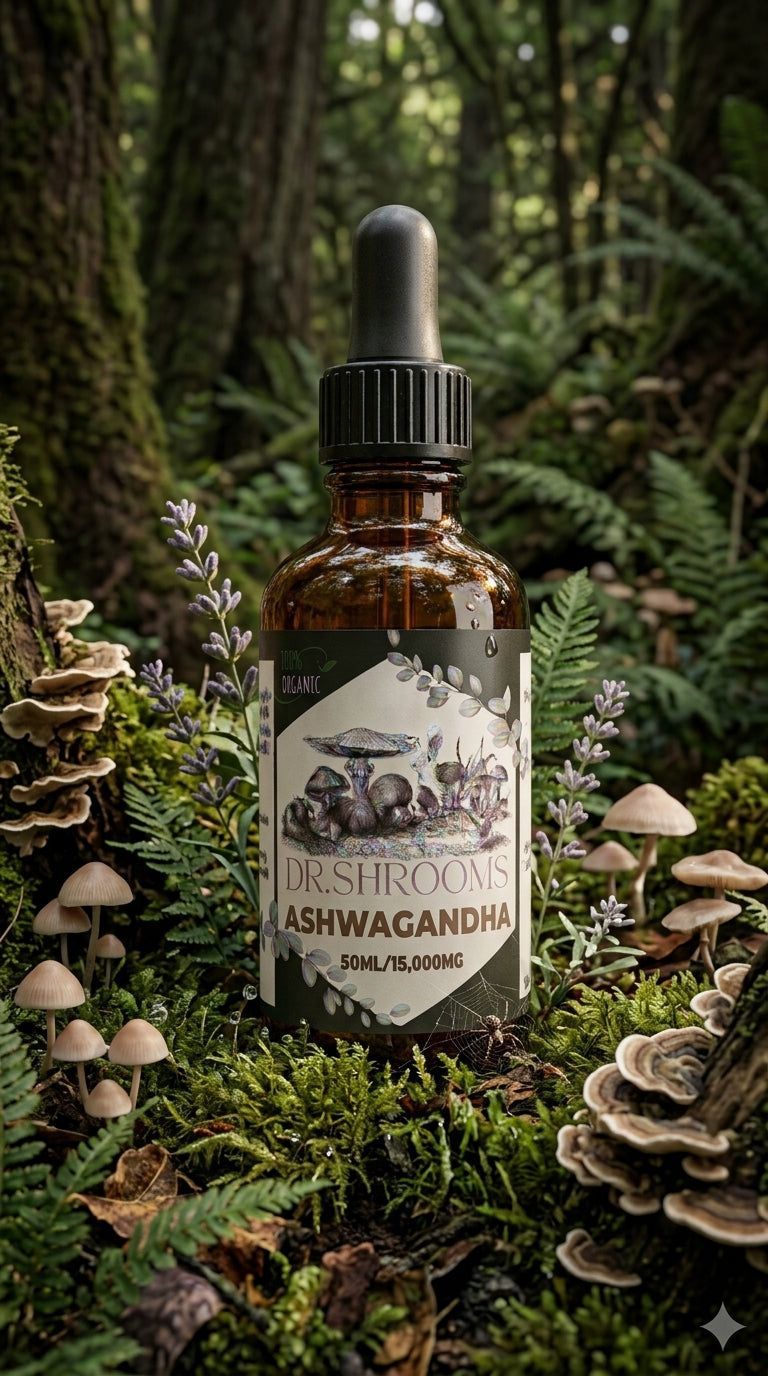
Ayurveda’s great calming root.
For over 3,000 years, Ashwagandha has held a place of honour in Ayurvedic tradition as a rasayana — a rejuvenating tonic for body and mind. It is an adaptogen: a plant traditionally used to help the body adapt to the pressures of everyday life.
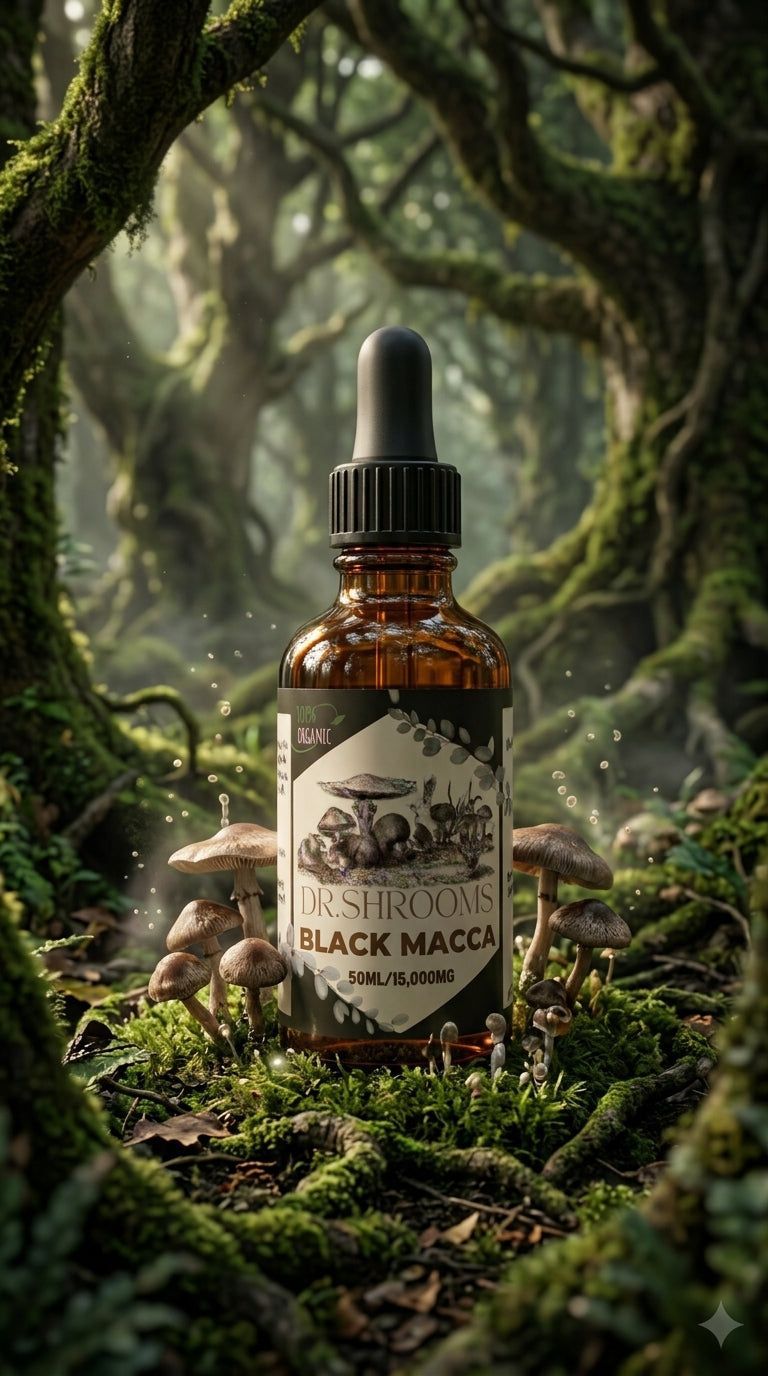
The rarest maca of the high Andes.
Maca has been cultivated in the Peruvian Andes for over 2,000 years, where it grows at altitudes few crops can survive. Of all its colours, black maca is the rarest — just 10 to 15% of each harvest — and has long been the variety most prized for vitality and stamina.
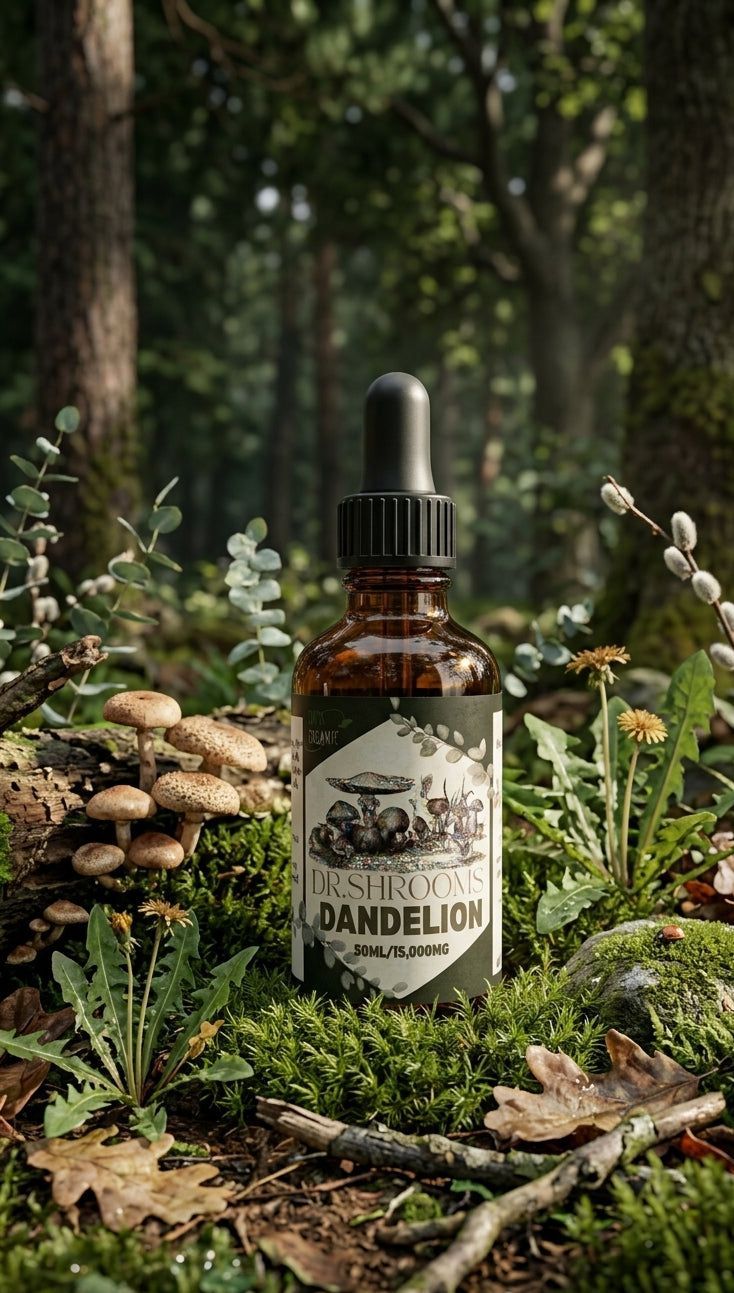
The humble herb with a thousand-year pedigree.
Far more than a garden weed, dandelion has been a trusted herb in European, Chinese and Ayurvedic traditions for over a thousand years. Its bitter root has long been used to support digestion, while its leaves are rich in vitamins and minerals.
The purple coneflower — a winter essential.
Echinacea was one of the most important herbs of the Native American Plains peoples, and today it is one of the best-selling herbs in the world. Traditionally taken through the colder months, it is a staple of the winter cabinet.
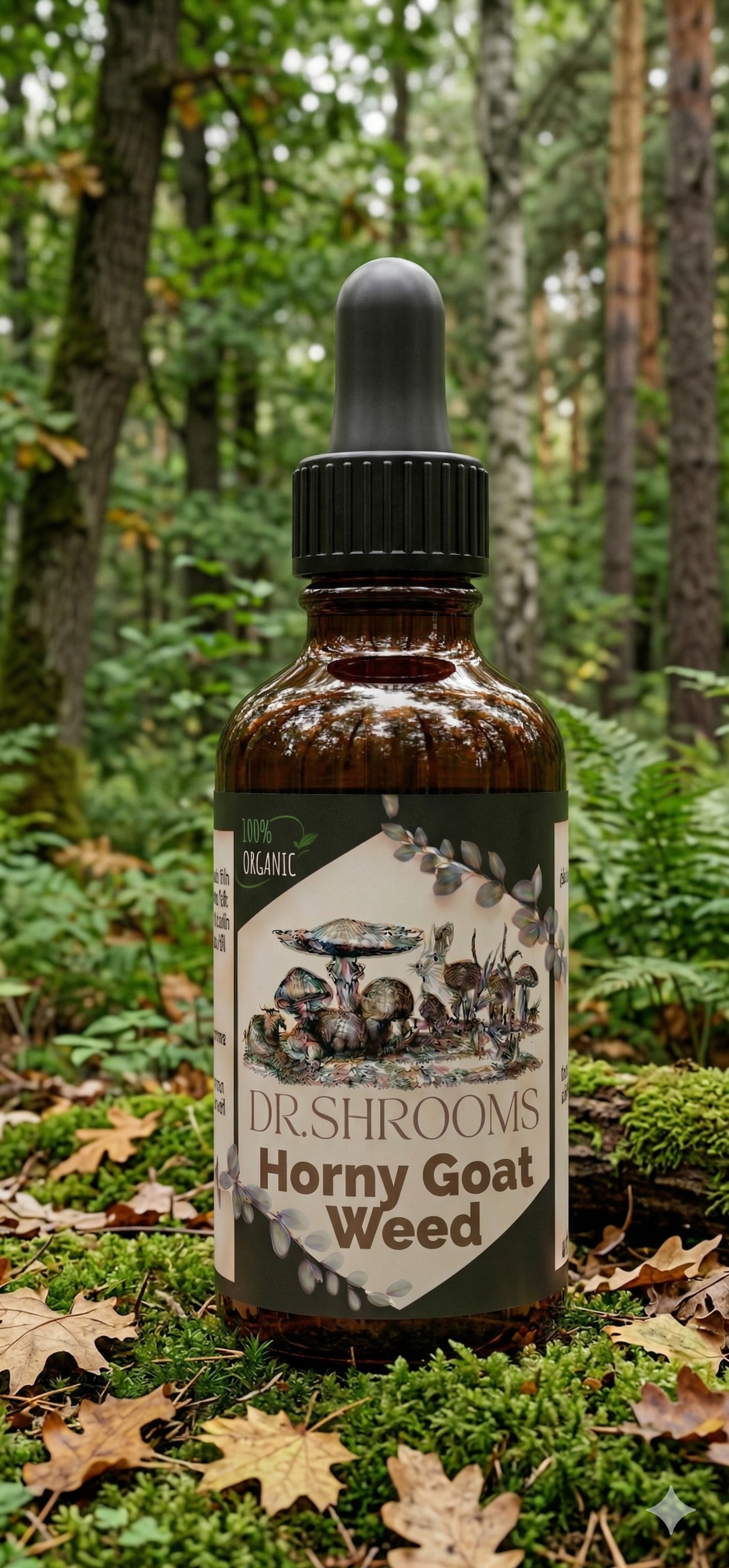
Chinese tradition’s famous vitality herb.
Known in China as Yin Yang Huo, Horny Goat Weed (Epimedium) has been used in traditional Chinese practice for over 2,000 years as a tonic for vitality and drive. Its signature compound, icariin, is what the plant is best known for today.
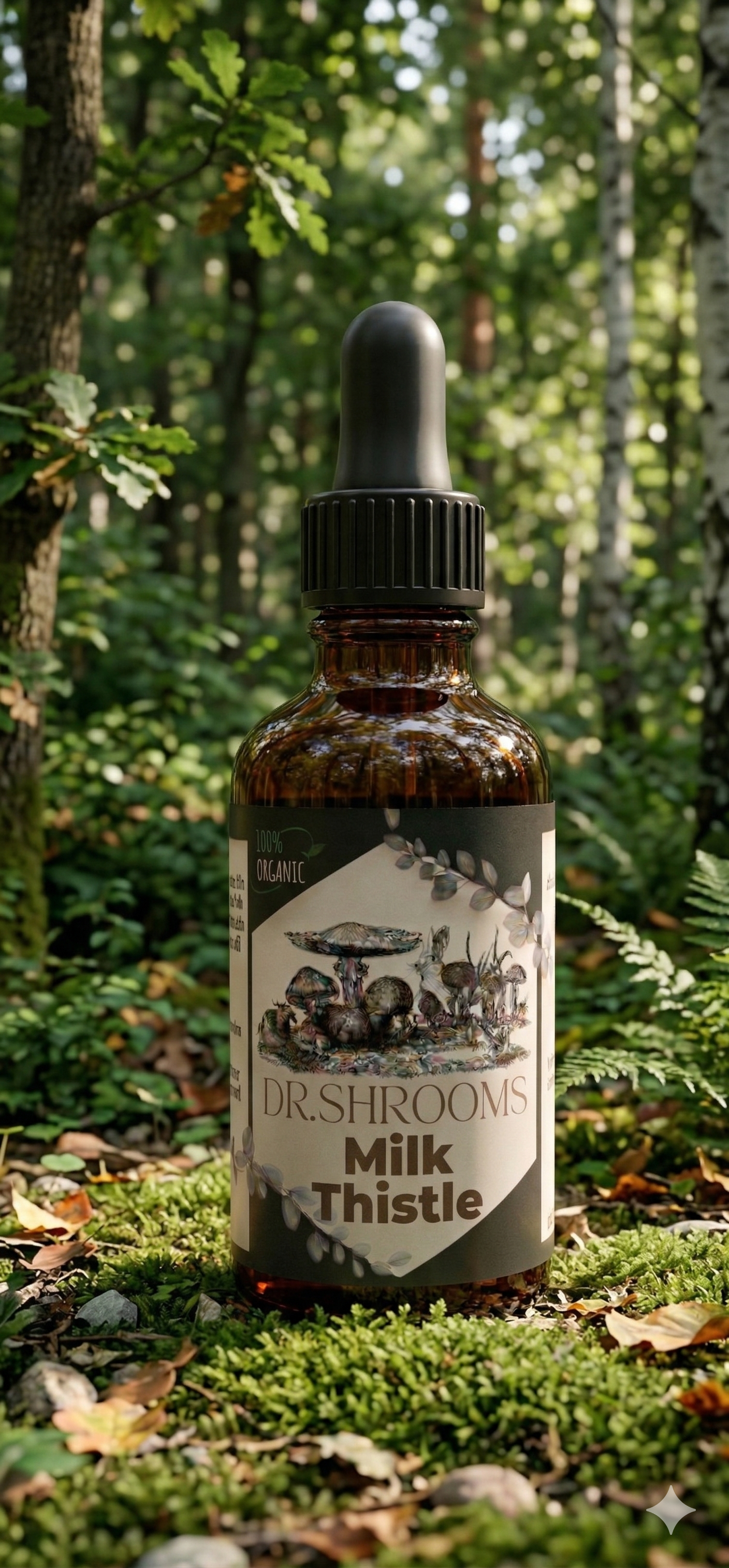
The classic European liver herb.
Milk Thistle has been part of European herbal tradition for over 2,000 years, recorded by Pliny the Elder and still one of the most widely used herbs today. Its seeds are the source of silymarin, one of the most researched plant compounds in the world.
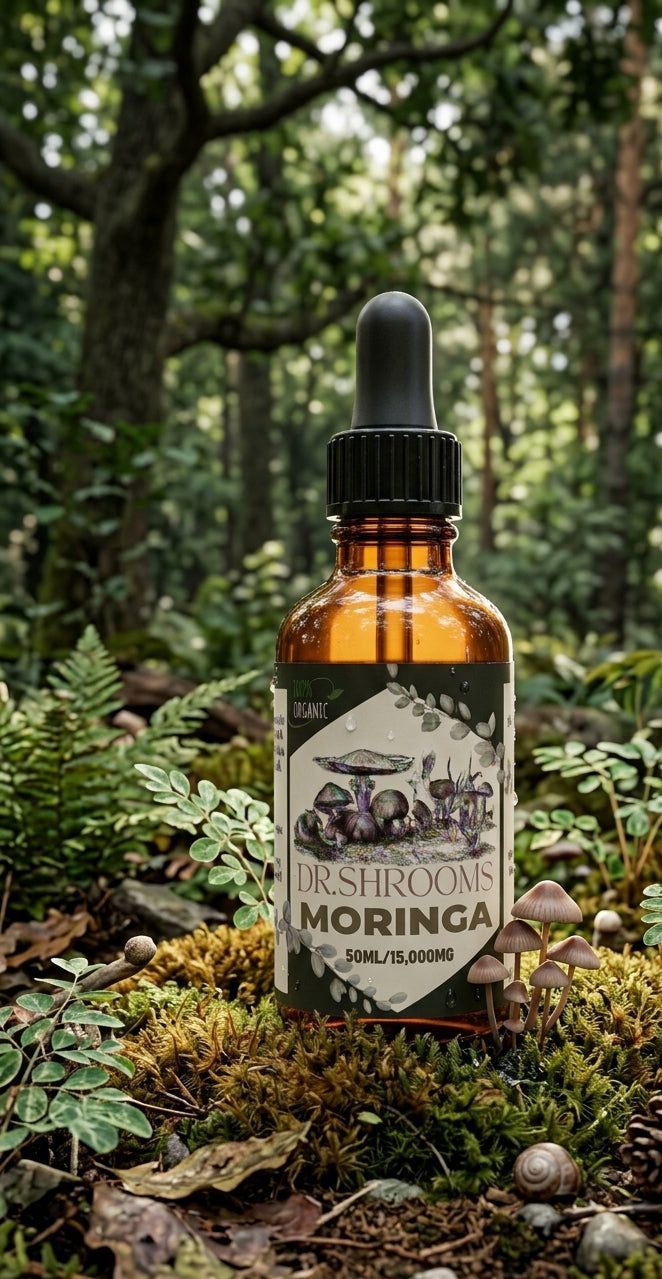
The “miracle tree” — nature’s green multivitamin.
Moringa has been used in Ayurvedic practice for over 4,000 years and is known across Africa and Asia as the “miracle tree”. Its leaves are among the most nutrient-dense of any plant, naturally containing a wide range of vitamins, minerals and amino acids.
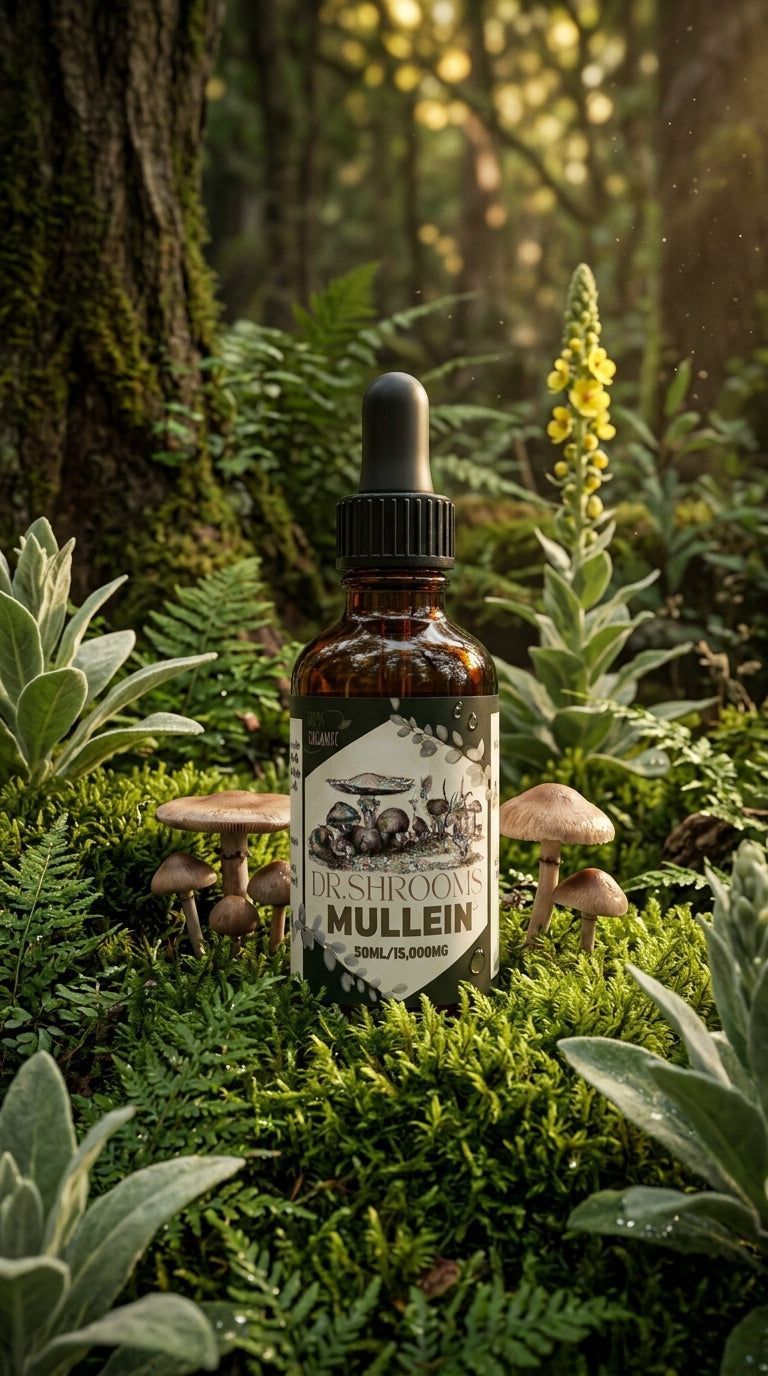
The velvet-leaf herb for the chest and throat.
Mullein, with its soft velvet leaves and tall yellow flower spikes, has been a traditional herb for the chest and throat for over 2,000 years across Europe and beyond. Its natural mucilage gives it its famously soothing character.
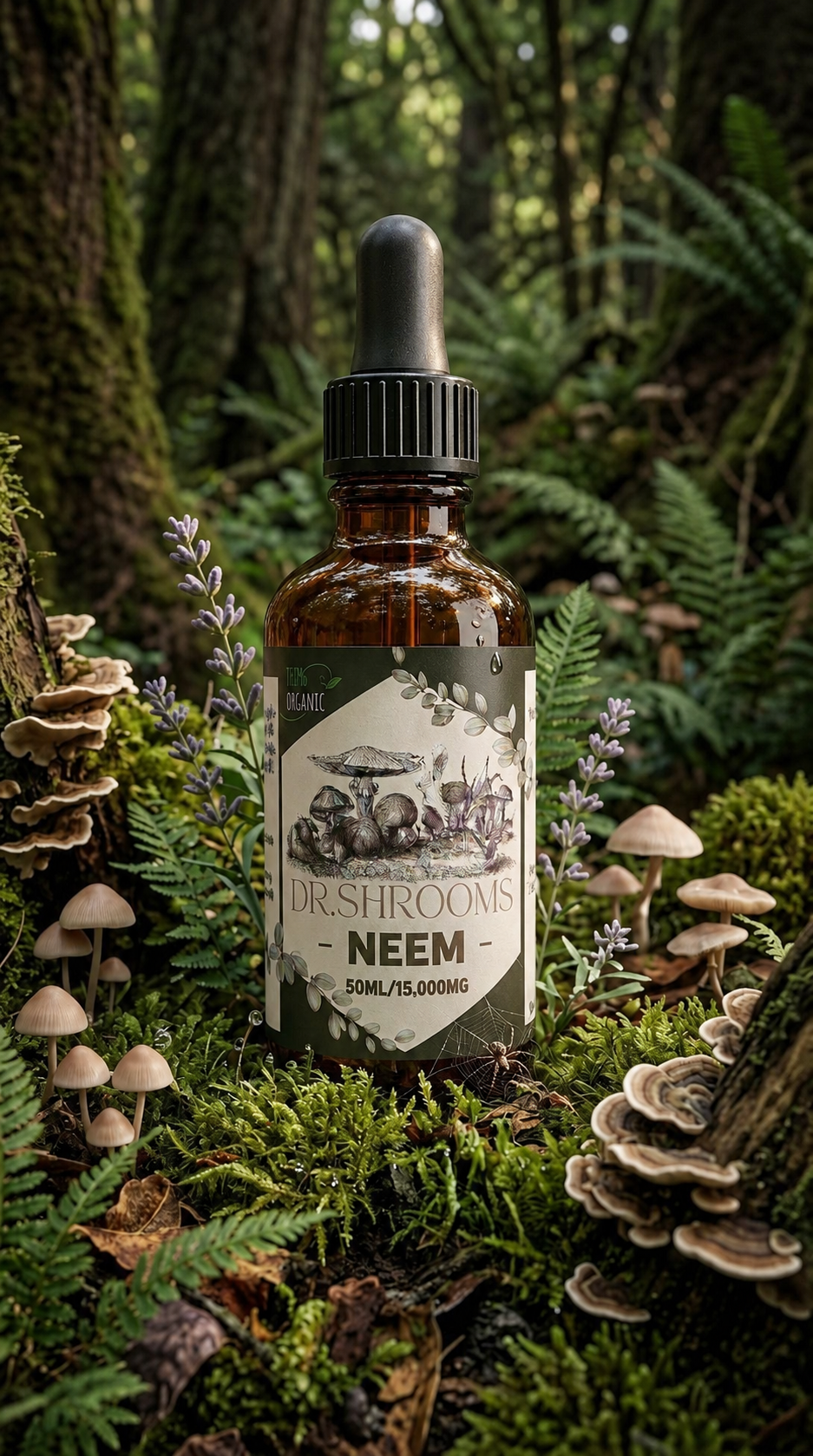
The “village pharmacy” of India.
Neem has been called the “village pharmacy” of India for centuries. In Ayurveda it is known as a Rakta Shodhaka — a purifier — and its famously bitter leaves are traditionally used to support clear skin and the body’s natural cleansing processes.
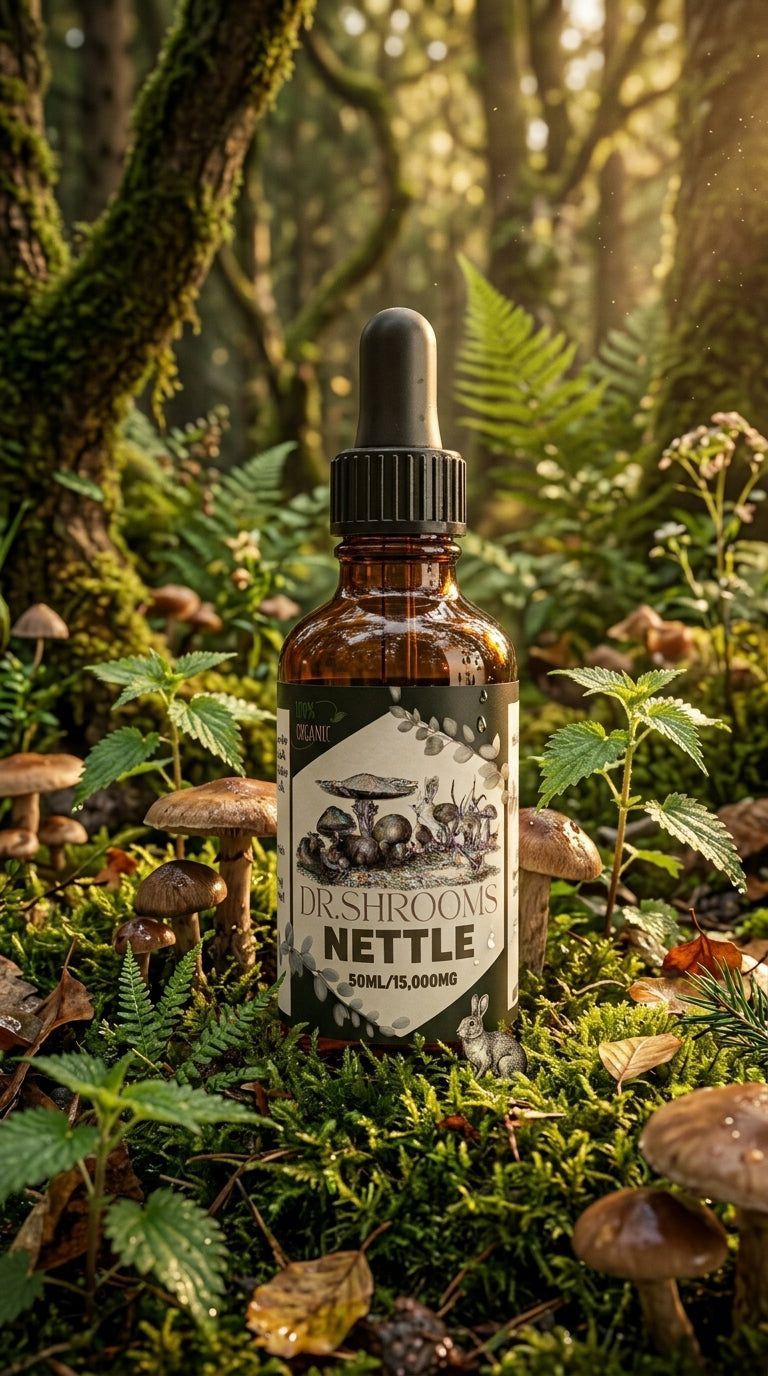
The mineral-rich spring green.
Stinging nettle has been gathered in spring for at least 2,000 years, used across Europe as a tonic, a food and a traditional herb. It is one of the most mineral-rich plants in the wild — and our tincture is made from fresh spring nettle, harvested at its peak.
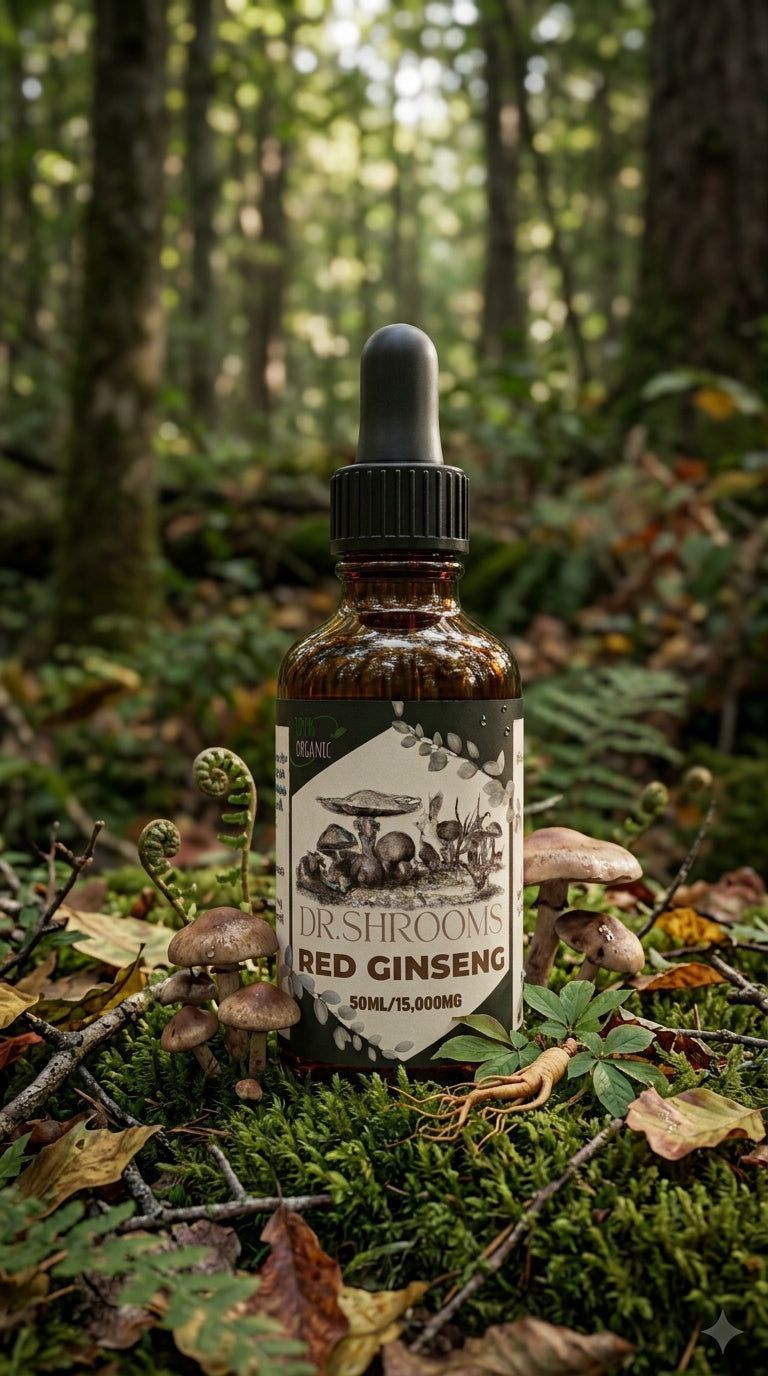
The world’s most time-honoured tonic root.
Korean red ginseng has been treasured for thousands of years as the king of tonic herbs. “Red” ginseng is made by steaming the root before drying — a traditional process that creates distinctive ginsenosides not found in raw white ginseng.
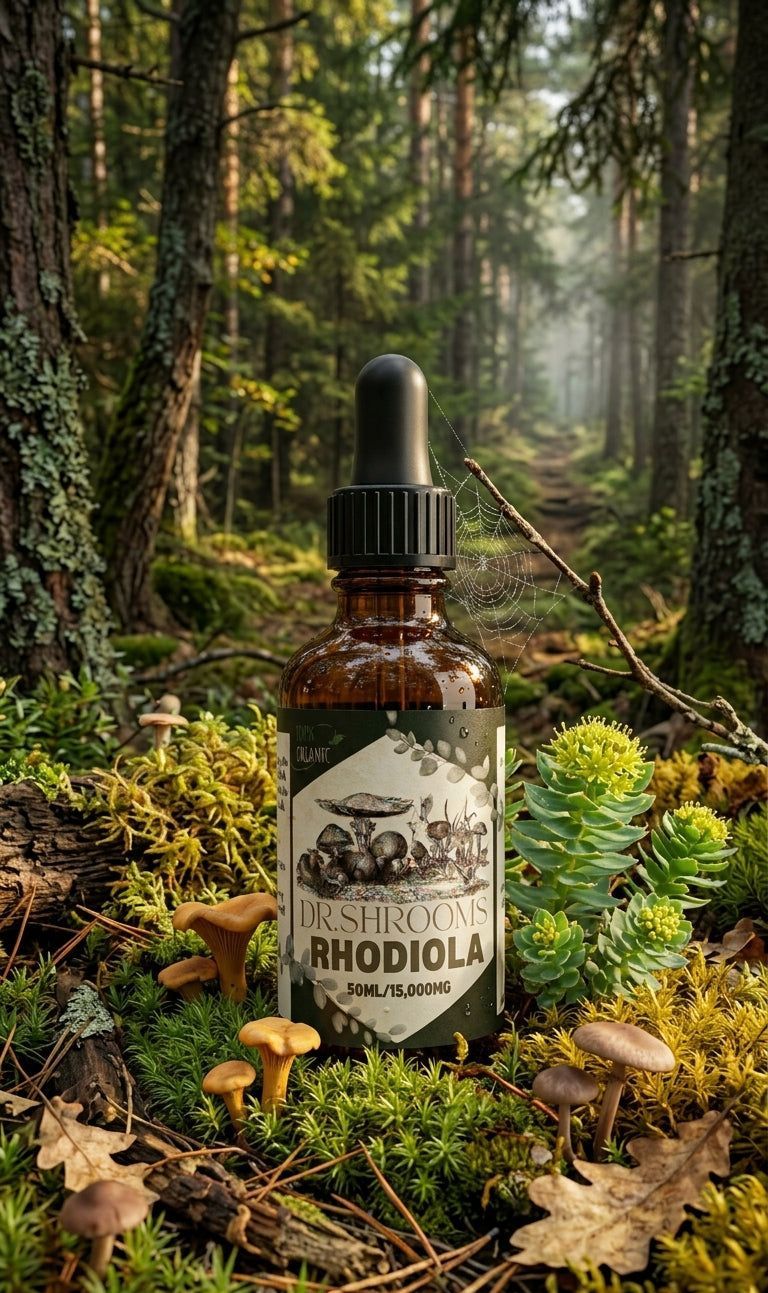
The golden root of the Arctic.
Rhodiola rosea grows in the harsh cold of the Arctic and high mountains, and has been used for centuries by Scandinavian and Siberian peoples to stay strong through long, hard winters. It is one of the world’s most studied adaptogens.
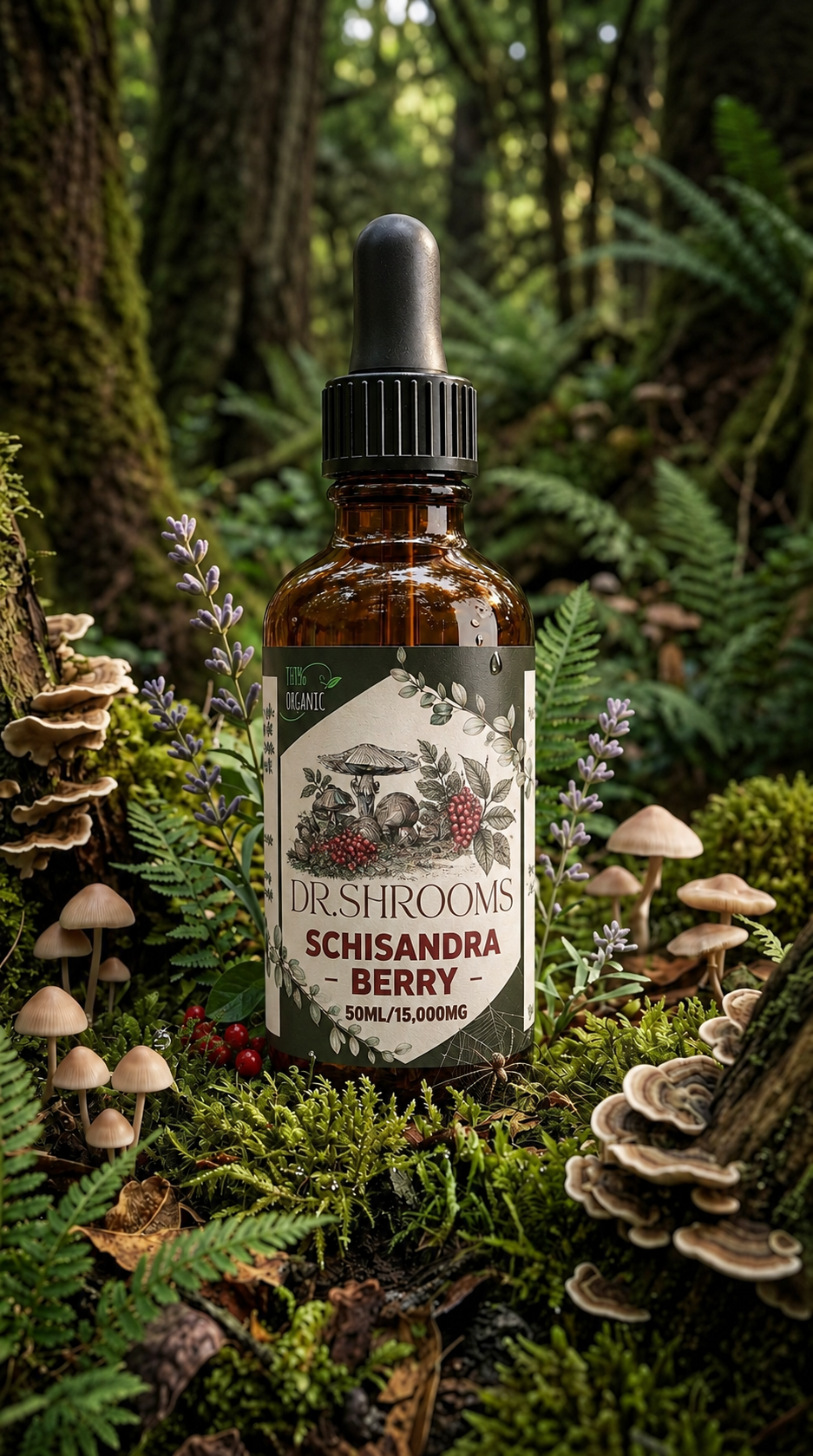
The five-flavour berry.
In Traditional Chinese Medicine, Schisandra is Wu Wei Zi — the “five-flavour fruit” — because a single berry is sour, bitter, sweet, salty and pungent at once. It was traditionally said to nourish every major organ system, and it is valued today as an adaptogen and a tonic for the liver.
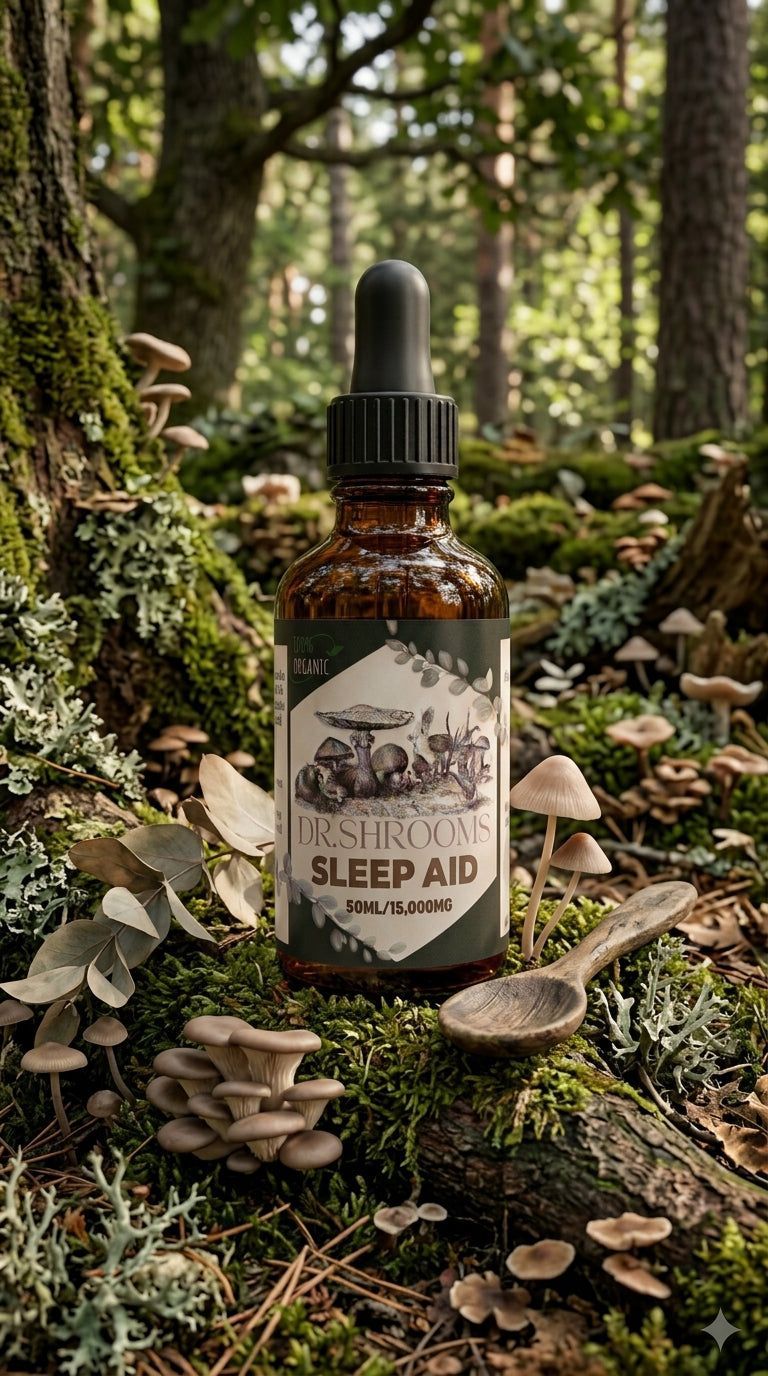
Four classic evening herbs, beautifully balanced.
A calming evening blend of four of Europe’s most traditional bedtime herbs: valerian, passionflower, chamomile and lemon balm. For centuries these herbs have been taken as night-time infusions to help people unwind — here they are carefully balanced in one tincture.
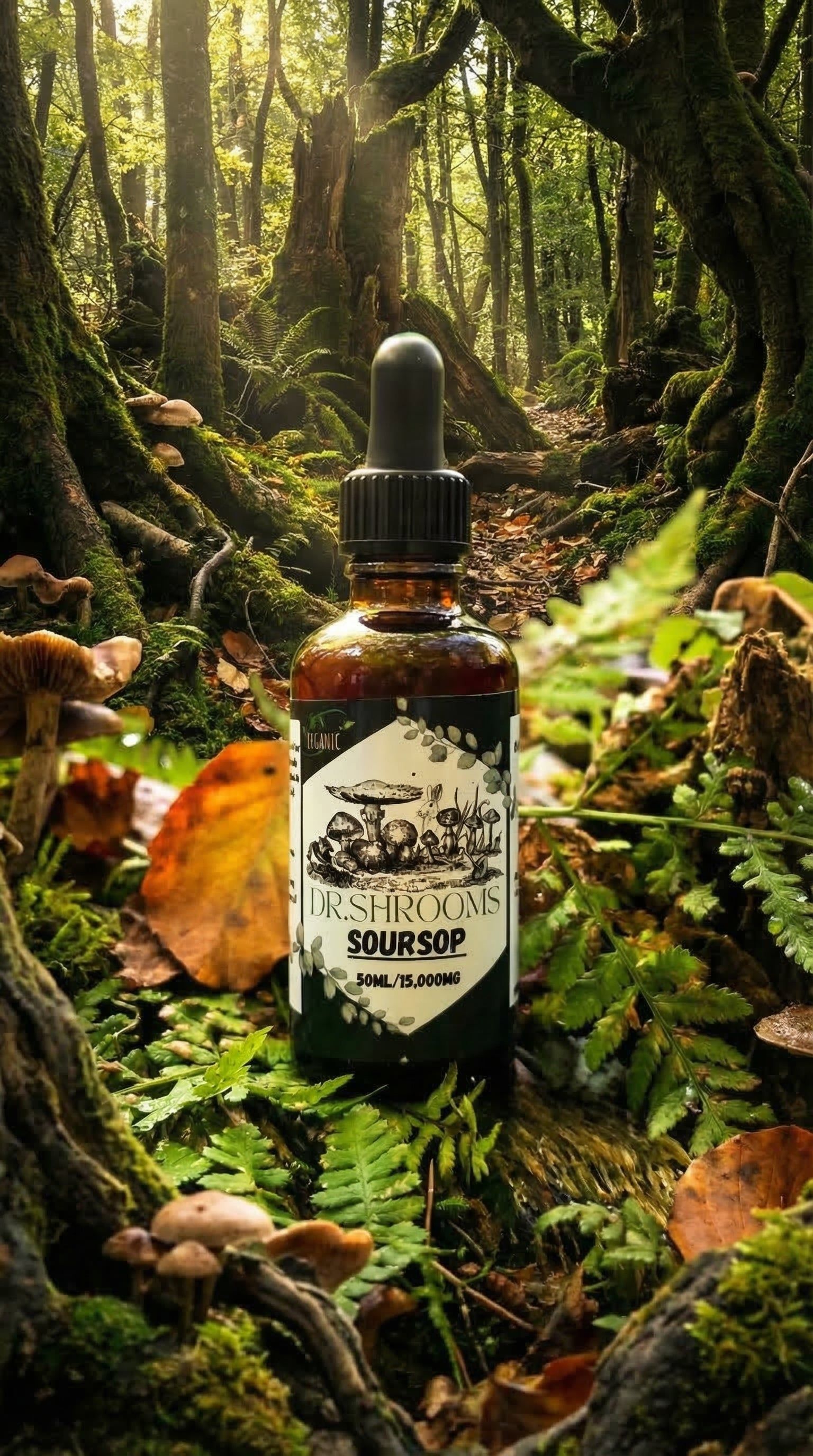
A treasured leaf of Caribbean tradition.
Soursop (Annona muricata), also known as graviola, grows across the Caribbean and the Amazon, where its leaves have been brewed as a traditional tea for generations. Naturally rich in antioxidant compounds, it is a much-loved herb in tropical traditions.
Southeast Asia’s legendary vitality root.
Tongkat Ali (Eurycoma longifolia) grows in the rainforests of Malaysia and Indonesia, where its root has been used for generations as a traditional tonic for men’s vitality, energy and drive.
No products found. Try a different search.